Parks and tourism: the BiodivTourAlps conference
Oct. 7, 2026 Territory

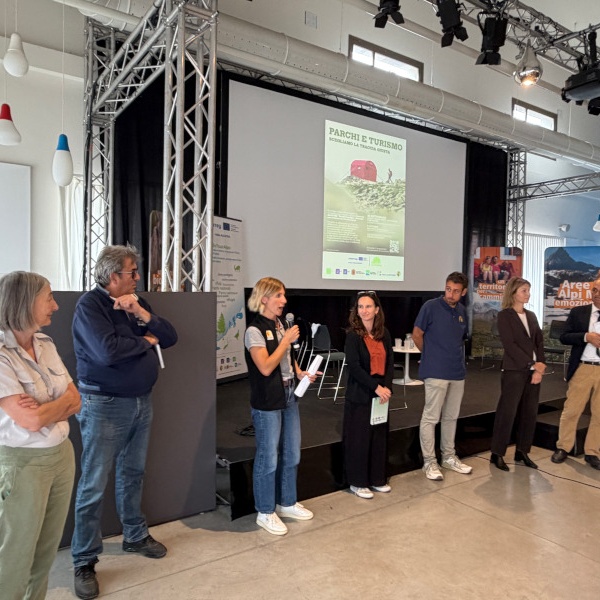
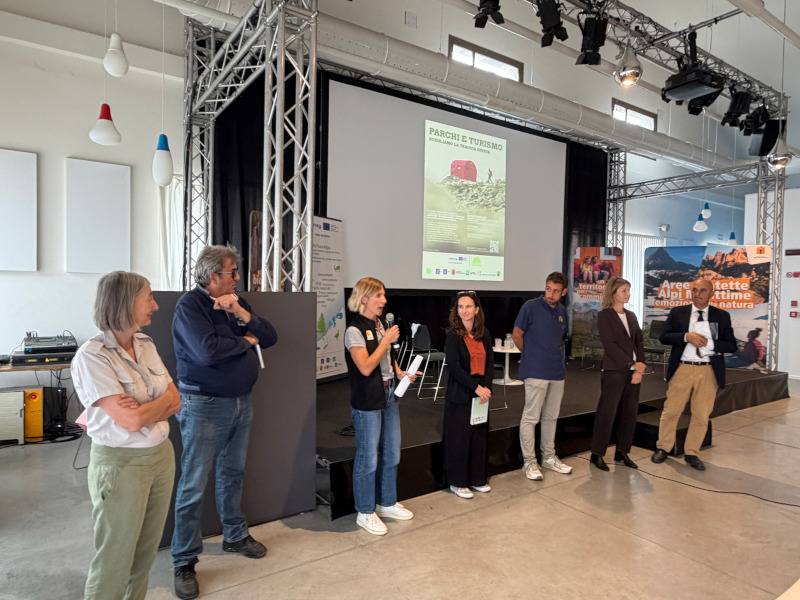
The initial greetings during the first day of the seminar in Cuneo.
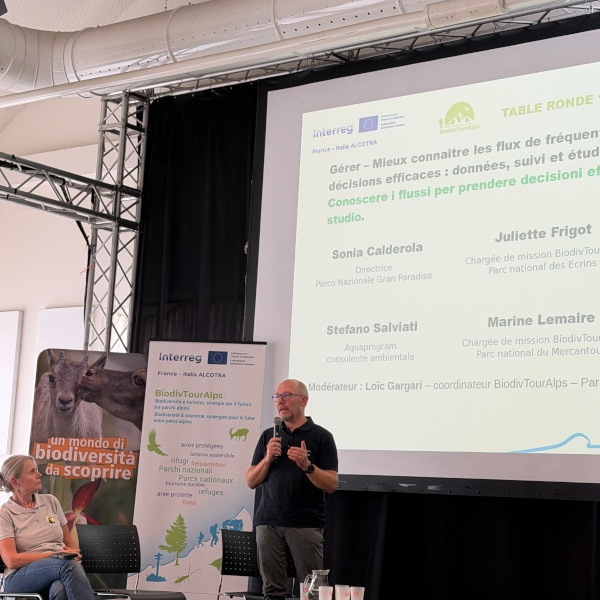
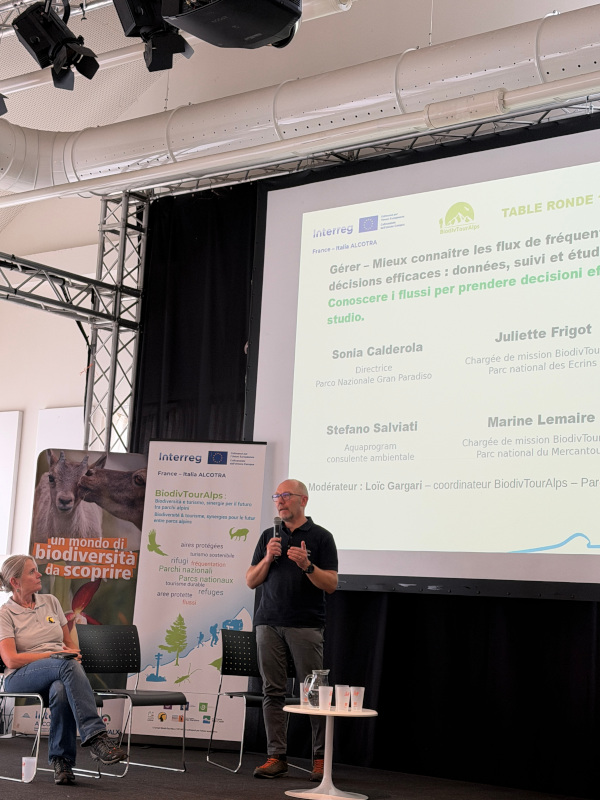
Luca Maurino of the Parks of the Cozie Alps during his speech.
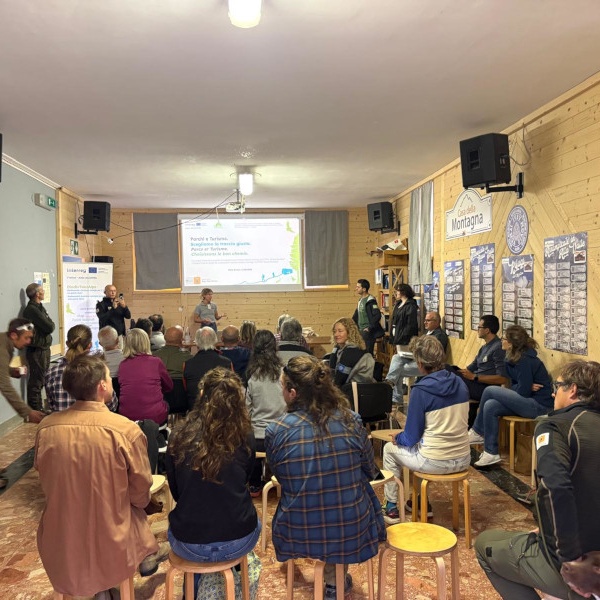
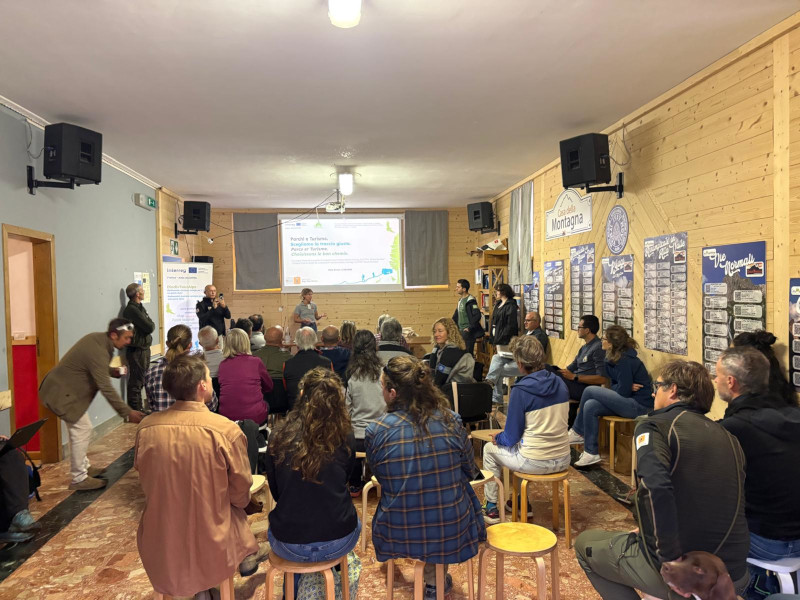
I work on the second day in Sant'Anna di Valdieri.
The initial greetings during the first day of the seminar in Cuneo. - Arch. Aree Protette delle Alpi Marittime
Luca Maurino of the Parks of the Cozie Alps during his speech. - Arch. Aree Protette delle Alpi Marittime
I work on the second day in Sant'Anna di Valdieri. - Arch. Aree Protette delle Alpi Marittime
All over the world, the pillars that support natural parks are the need to protect ecological balances and the need to open up to visitation to allow the public to enjoy the wonders of the environment and learn to recognize its values. However, these two principles can often be even antithetical, leading to genuine conflicts if appropriate management strategies are not adopted to harmonize conservationist intentions with the necessity for accessibility and tourism.
BiodivTourAlps: a summary
Between September 30 and October 1 of this year, the final seminar of the Interreg Alcotra BiodivTourAlps project took place in Cuneo, which during the 2021-2027 European programming period brought together the efforts and work of 7 regional and national parks distributed along the Western Alps between Italy and France. The meeting organized by the Protected Areas of the Maritime Alps saw the participation of all project partners, including the Protected Areas of the Cozie Alps, the Regional Park of the Ligurian Alps, the Gran Paradiso National Park, and the French national parks of Mercantour, Ecrins, and Vanoise.
The first day of the conference
During the first day, the work took place at the Auditorium Foro Boario with the presentation of the main actions that each partner developed within the project. The Protected Areas of the Cozie Alps illustrated the work done at the summer information points of Ser Blanc at the entrance to the Gran Bosco di Salbertrand Natural Park and at Baracot at the entrance to the Val Troncea Natural Park, as well as the monitoring points along the Provincial Road of Assietta where tourists and visitors are provided with useful information about enjoying the Parks by naturalistic guides equipped with specific skills concerning the ecological aspects of the territories. Another theme developed in the Parks of the Cozie Alps concerns the measurement of vehicular traffic on the Assietta Road using two specific devices placed at the two access points that recorded vehicle passes for three consecutive summers, providing valuable data that could guide future strategies for managing flows in a way that respects both ecological needs and the various categories of users.
Regarding the other parks, the Gran Paradiso National Park also worked on the theme of vehicular traffic on the road leading to Colle del Nivolé from Ceresole Reale, where a maximum limit of vehicles has been introduced that, with prior reservation, can travel along the road each day in the summer months. Visitor flow management was handled by the staff of the Parc National des Ecrins, who initiated a project to organize campers within the protected area. Specifically, in the area around Lake Lauvitel, where the phenomenon had reached problematic dimensions, it was decided to designate a specific area for camping to alleviate the pressure on the rest of the riparian area.
Likewise, the Parc National du Mercantour addressed lakes, where the visitation of freshwater basins at high altitudes has seen a significant increase, impacting surrounding aquatic ecosystems. To better understand the habits of users and their motivations, a complex qualitative questionnaire was developed to guide future management policies. Similarly, the Ligurian Alpine Regional Park measured the number of visitors reaching the lakes of Rocchetta Nervina over two summer seasons to enjoy the coolness of the water in a highly scenic area. Part of the study also focused on quantifying the noise pollution generated by activities such as canyoning on the fish population in the Barbaira stream.
Finally, two communication projects were presented by the Protected Areas of the Maritime Alps and the Parc National de la Vanoise. The first consists of a sensitization effort for mountain professionals (Alpine guides, mid-mountain companions) aimed at transmitting a culture of environmental protection to those who accompany tourists and, consequently, to their clients. The second project was managed by the French park with the goal of sharing a series of content focused on respectful visitation of natural areas within the Parks on Instagram. Through a partnership with the French portal Loomi, dedicated to promoting outdoor activities, posts and reels were published about rules, precautions, and considerations to take when venturing into a protected area and in the mountains in general.
The second day of discussion
The day of October 1 was dedicated to the theme of refuges as privileged places to raise awareness among mountain visitors and park-goers about the consequences of climate change. The activities were initially planned to take place at the Valasco Refuge, in the Maritime Alps Natural Park, but bad weather led organizers and participants to remain at a lower altitude in the Sant’Anna di Valdieri fraction. Among the presentations, a significant project developed in France by a coordination of associations called Refuges Sentinelles aimed to place these structures at the center of a flow from the scientific community to mountain users to convey knowledge to the public on how to preserve an environment particularly sensitive to climate changes, while conversely allowing scholars and researchers to better understand the habits and behaviors of mountain enthusiasts.
From a more concrete perspective of adapting to climate crisis, the Protected Areas of the Maritime Alps presented a manual developed in collaboration with Cipra Italia on good practices for the sustainable management of refuges. A document that has collected data, scientific analyses, and a large number of case studies already implemented in various areas of the Alps to support refuge owners and managers in handling the water shortages that are becoming an increasingly common problem.
In conclusion of the two days, a constructive debate among technical staff from different parks, park rangers, refuge managers, and Alpine guides highlighted the regulatory, organizational, territorial, and visitation differences that exist among each entity, but allowed all present to realize the commitment and effort that all stakeholders are employing in trying to find solutions adaptable to each reality to manage tourist flows in defense of ecological balances without harming local activities and attempting to limit conflicts.
You might also be interested in...
- tactic Alcotra BiodivTourAlps
- campaign BiodivTourAlps: 4 webinars on the management of tourist flows in protected areas
- campaign Sci fuoripista & animali selvatici
- campaign Calendario Parchi Alpi Cozie 2026: Droni & aree protette
- campaign BiodivTourAlps and Loomi: collaborating for the protection of the mountains
- campaign Drops of Change: 8 experiences of sustainable water management in agriculture and livestock farming
- campaign Drops of change in the Cozie Alps Parks
- tactic Alcotra AClimo
- tactic PITEM Biodiv’Alp: PROBIODIV
- campaign In search of the lost ice on the Lakes of Avigliana