The depopulation of wild boars to combat ASF
Oct. 29, 2026 Territory

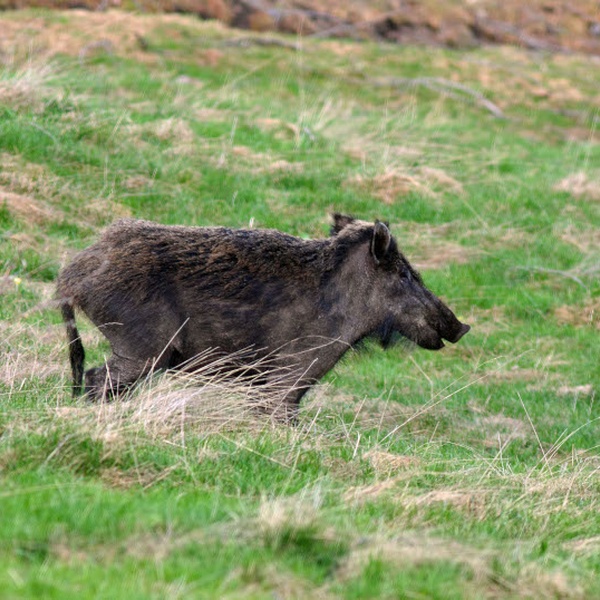
A wild boar in the Gran Bosco di Salbertrand Natural Park - G. Roux Poignant
The activities of wild boar depopulation in the Protected Areas of the Cottian Alps are ongoing. This is an activity introduced by the Regional Emergency Intervention Plan adopted by the Piedmont Region following the emergence of African Swine Fever (ASF) in the regional territory at the beginning of 2022. The objective of the measures is to contain the populations of the species Sus scrofa, even in areas where the virus is not yet present, with the aim of limiting its spread.
The personnel responsible for monitoring in the management bodies of protected areas are also involved in the actions. In the Parks of the Cottian Alps, the adoption of the plan primarily focused on passive monitoring activities that have been intensified by the park rangers for the possible discovery of carcasses of boar for analysis capable of detecting the presence of ASF and for a more precise localization of the communities present in the territory. Only after this did the culling activities begin, which, within the protected areas, must follow specific requirements and represent a productivity target set at 19 heads for the year 2026.
Species containment and environmental protection
In pursuing the main statutory purpose, which is the protection of the environment, a Park Authority may effectively resort to containing a species through harvest if excessive presence disrupts the ecological balances of a territory. However, this must happen without causing further disturbances to other species and, in general, to the entirety of the ecosystems present within a park. For example, culling using rifles must not interfere with the reproduction of birdlife or other ungulates and must be planned with great care during periods of less impact. The human species must also be taken into account, in fact, containment activities are suspended in the summer season so as not to hinder tourist attendance and the work of shepherds during the summer grazing months.
Animal welfare and damage containment
Another aspect that requires great attention is the respect for animal welfare. In the case of capture using traps, it is necessary to promptly proceed with the euthanasia of the individuals, even at night, to avoid long and painful stays within the cages. When using ambushes, only close-range shooting should be carried out to increase the chances of a successful shot and to proceed with a more accurate selection of the individual to be harvested. Again, operations are conducted under the cover of darkness using night vision devices and, when possible, the presence of Cherz, the tracking dog ready to intervene when the boar is only injured, is ensured.
To also meet human needs, operations are concentrated in areas where the greatest damage caused by wild boars is reported as a further dissuasion action. Recently, in the Natural Park of Avigliana Lakes, some operations were organized in an area bordering a residential zone where some citizens have reported the presence of boar herds crossing from the hilly territory at night.
Redistribution of meat
Finally, the Parks of the Cottian Alps have activated a specific chain for the management of the carcasses of harvested animals which, without profit or expenses for the Park Authority, provides for the use of the meat that is destined for needy families in the territory or to those who have suffered damage to their land.
You might also be interested in...
- campaign Two virtuous supply chains for managing the meat obtained from the containment of wild boars.
- campaign Wild boar meat distributed in Avigliana
- campaign The role of supervision in the work of park rangers
- campaign thwarted theft in the Avigliana Lakes
- campaign Concorso pubblico per titoli ed esami per tre figure di Guardiaparco - Agente di Vigilanza
- campaign Maya has obtained the anti-poison dog certification.
- campaign 39 anni da guardiaparco. Domenico Rosselli racconta una carriera nella natura
- campaign Valentina Mangini: 35 years as a park ranger between rigor and fantasy
- campaign Il Ministro Pichetto Fratin visita le Aree Protette Alpi Cozie
- campaign From a passion for nature to a life as a park ranger