Cherz, the tracking dog of the Alpi Cozie Parks
Sept. 29, 2026 Ente Parchi Alpi Cozie

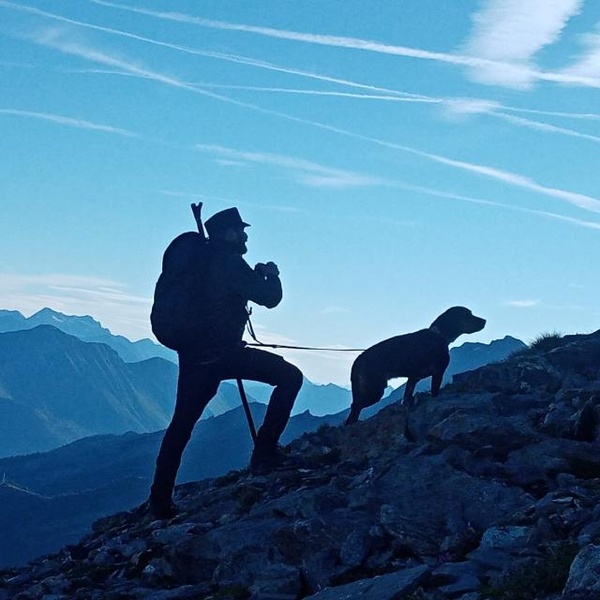
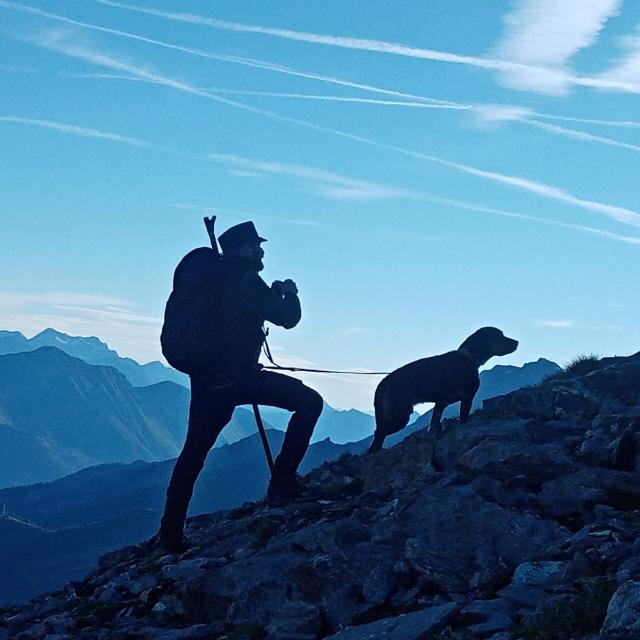
Cherz with its conductor and park ranger Ghirardi
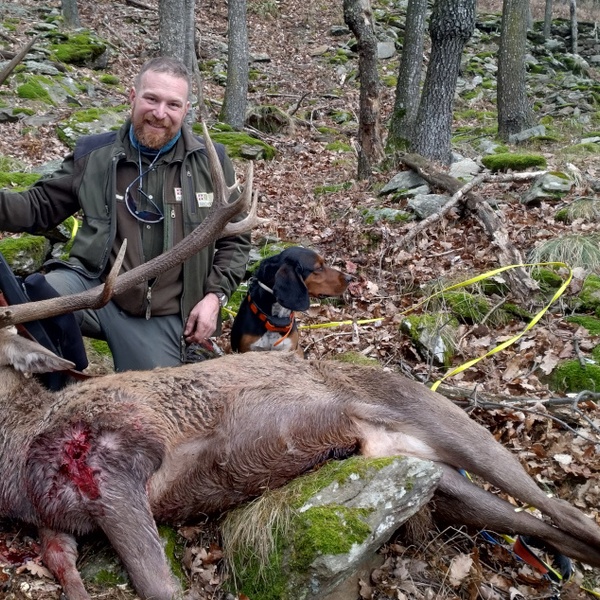
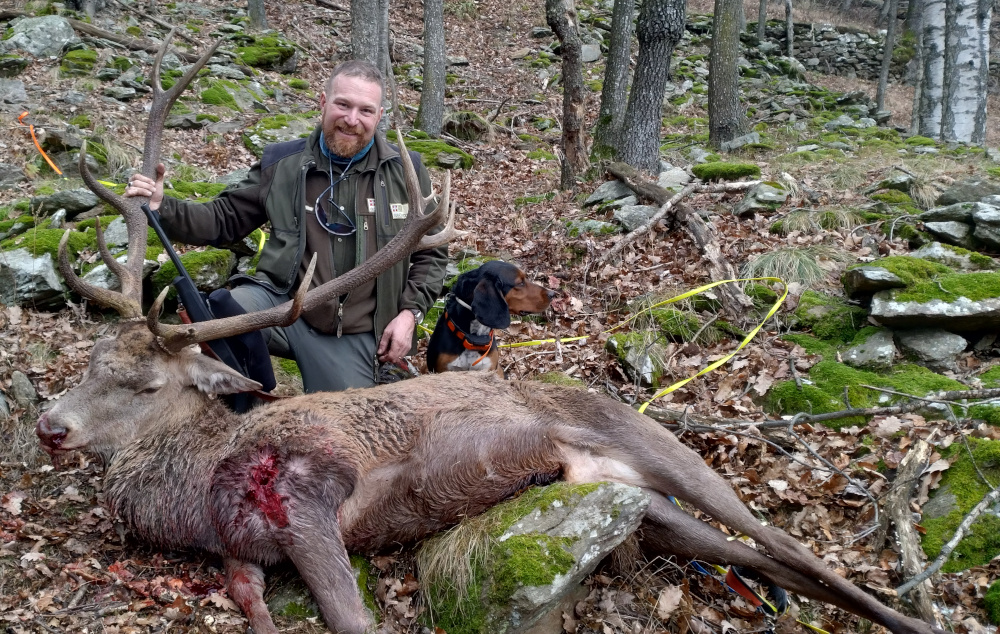
Dear Ghirardi after the discovery of a large specimen of deer.
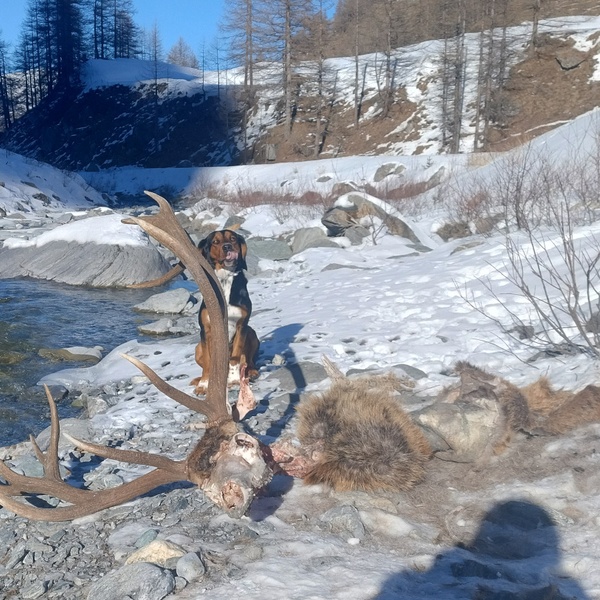
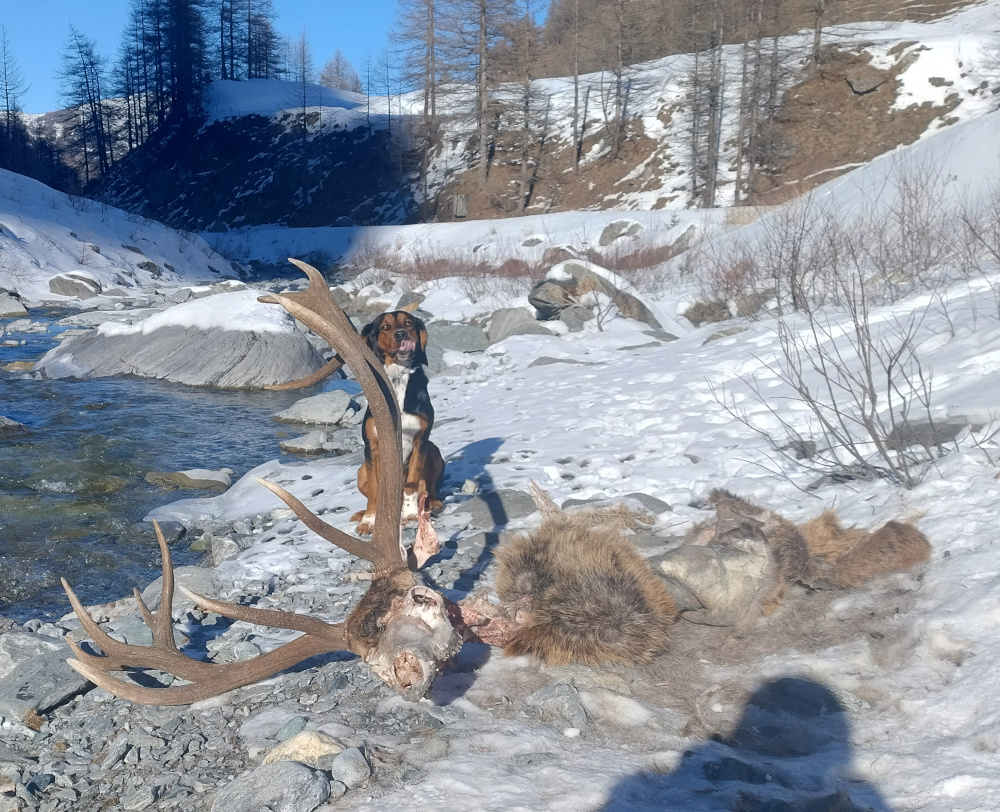
A deer carcass identified by Cherz.
Cherz with its conductor and park ranger Ghirardi - Arch. Parchi Alpi Cozie
Dear Ghirardi after the discovery of a large specimen of deer. - Arch. Parchi Alpi Cozie
A deer carcass identified by Cherz. - Arch. Parchi Alpi Cozie
In the staff of the Protected Areas of the Cottian Alps, there are 3 silent operators who are extremely valuable. They consistently work with great selflessness, speak little, and always get along with all their colleagues as long as they receive a bit of affection and some kibble. We are, of course, referring to the canine units. Luna, with park ranger Bonicelli, and Maya with park ranger Brino, are anti-poison dogs, used to detect toxic bait that is often used to kill wildlife and pets. We have previously written about them to recount their training and some operational activities. But there is a third unit, less visible but equally important; it is called Cherz, a tracking dog.
How does a tracking dog work?
“Wild animals – explains Lorenzo Ghirardi, handler of Cherz and head of surveillance in the Natural Park of Val Troncea – emit a olfactory trail that some dogs can distinguish and follow. Let's take ungulates as an example: between the hooves of their feet, they have glands that secrete odoriferous substances peculiar to each individual. Cherz’s ability lies in identifying that specific trail and following it. This type of dog has been selected in a hunting context to track wounded animals, but not killed, during hunting trips. From an operational point of view, the dog is led to the spot where the wild animal was injured, picks up the olfactory characteristics, and begins to follow them until it finds it. It is always accompanied by its handler, with whom it forms what is defined as a team, and remains always attached to its owner by a leash, called long because it can reach up to 12 meters. From an ethical perspective, as well as regulatory, the tracking dog should be activated every time an ungulate is wounded because its recovery is crucial for being included in the count of the heads included in the culling plan, avoiding an increase in hunting pressure. Unfortunately, in reality, we are mostly called only when the specimen is particularly interesting as a trophy...
What breeds of dogs are most commonly used?
“In general, tracking dogs belong to breeds mainly from the Germanic area, where certain types have been identified as being more suited, such as Bavarian and Hanoverian hounds or the German dachshund. Cherz is a Tiroler Bracke, a very exclusive breed, selected in Austria and still managed by the Klub Tirolerbracke based near Innsbruck. I had to pass a strict selection to register with the association and obtain the status necessary to purchase a puppy because this type of dog is rarely given to those living outside Tyrol. But we have reciprocated the trust they have placed in us because Cherz ranked first in the exam to obtain the certificate issued by the Klub. In Italy, we have obtained recognition from the Italian National Kennel Club, which provides us with the authorization to operate officially.”
What is the utility of a tracking dog for a park authority?
“Throughout my career as a park ranger, first in the Royal Parks and now in the Protected Areas of the Cottian Alps, I have always had a tracking dog with me. It’s a passion that I try to transfer into professional use because it can have very positive effects on daily work. In recent years, with the increase in wild boar containment activities, we intervene during operations with the help of the culling operators, ready to start searching for injured animals. On other occasions, during normal surveillance activities, Cherz proves very useful in finding dead animals, even from natural causes, on which we can conduct further investigations and monitoring. In some cases, it has detected hidden people in the woods and has alerted us to the presence of wolves. In short, it can serve as an additional colleague thanks to its extraordinary sense of smell.”
What are some significant results you have achieved with Cherz?
“Certainly, its greatest operation was the finding of a large wounded deer, which it followed the trail for over 4 km and 500 meters of elevation uphill. In another situation, in the Natural Park of Val Troncea, it identified a dead deer near the Chisone stream that we were able to remove, avoiding the risk of water contamination. But beyond the most spectacular results, all the findings of wildlife made by Cherz within the Parks are important because they allow us to carry out morphometric surveys that are extremely useful for the scientific activities of the authority. With the hope of further improving wildlife management by increasing the operational capacity of the tracking dog on traffic accidents where wild animals are injured, which in most cases die later, evading official counts.”
You might also be interested in...
- campaign 39 anni da guardiaparco. Domenico Rosselli racconta una carriera nella natura
- campaign From a passion for nature to a life as a park ranger
- campaign Luna, antivenom dog
- campaign The migrations of ibexes and climate change
- campaign Climate change is pushing birds higher.
- campaign Towards the Area Plan of the Val Troncea Natural Park
- campaign Three projects dedicated to water in the Cozie Alps Parks
- campaign Concorso pubblico per titoli ed esami per tre figure di Guardiaparco - Agente di Vigilanza
- shopping_cart Boschi, Stato, comunità e fortificazioni. - Storie di gestione territoriale, usi, abusi e furberie nell'alta val Chisone dal XVII al XIX secolo.
- shopping_cart Biologia e conservazione degli ungulati alpini