The Way of the Speaking Stones in Mompantero
Sept. 10, 2026 Territory

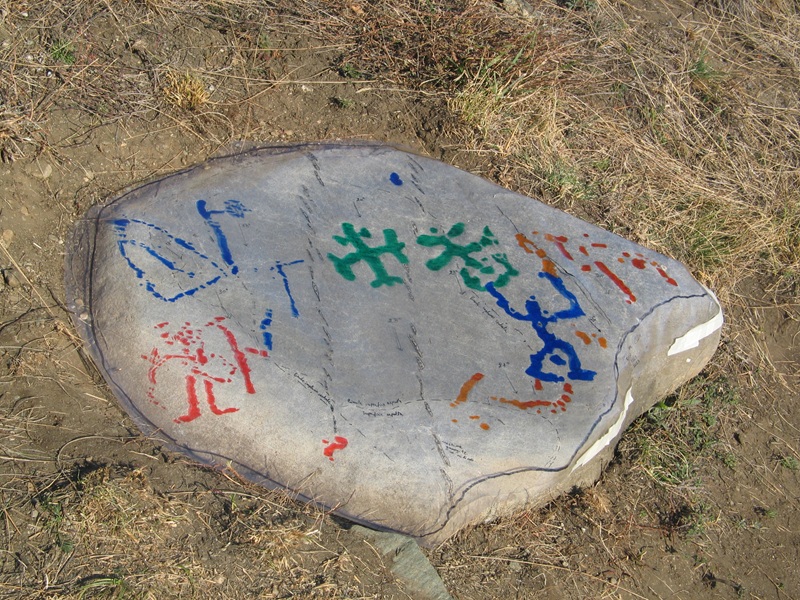
Rocca del Chiodo-Masso of the palimpsest-stratigraphic layout of the petroglyphs (13th-16th century)
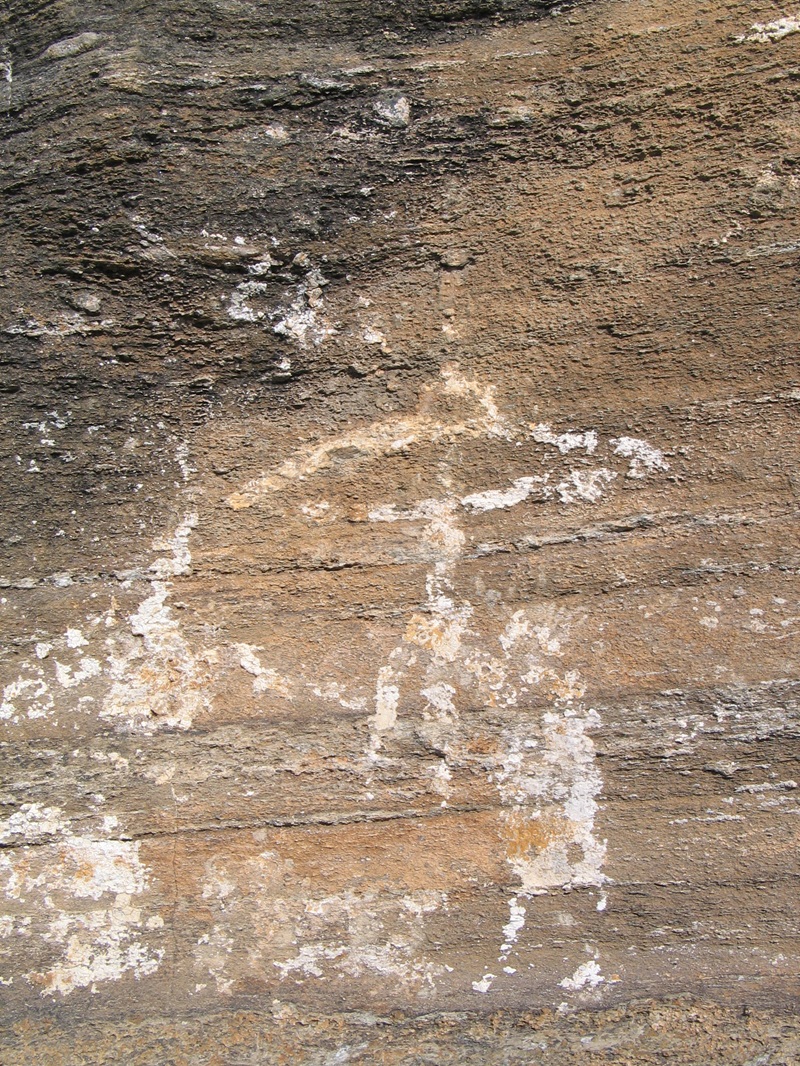
Rocca del Chiodo - Rock painting - 14th century
Rocca del Chiodo-Masso of the palimpsest-stratigraphic layout of the petroglyphs (13th-16th century) - AIPSAM
Rocca del Chiodo - Rock painting - 14th century - AIPSAM
The weekend of September 26-27 is dedicated to the European Heritage Days 2026 "Protecting Heritage: Renewing, Resisting, Reinventing".
It is on this very relevant theme that the proposal from the AIPSAM Association for Historical Environmental Heritage fits in, as part of the enhancement and promotion program of the territory "Fields, Walls, and Speaking Stones. The construction of a medieval and modern rock landscape in Mompantero" since it is not only a form of resistance against the loss of a collective historical heritage, but also renews and reinvents the perspective of observing two assets, archaeological and landscape-environmental at the same time, whose functional relationships were ignored in the past.
10:00 AM appointment at the Madonna dell’Ecovà chapel for a guided tour on the ground (duration about 2 and a half hours).
2:30 PM in the Council Hall of the Municipality of Mompantero (Piazza Bolaffi 1), presentation of the dedicated digital platform.
info.alpicozie@ruparpiemonte.it
tel. Municipality of Mompantero 0122-622323 (internal 1)
The Fields, Walls, and Speaking Stones program - which has received the valuable collaboration of the National Research Council and funding from the CRT Foundation - enhances the rock landscape of the southern slopes of Rocciamelone, modified by human activities since the last centuries of the early Middle Ages through the construction of cultivable terraces bordered by dry stone «walls», the routing of communication paths, and water management.
The Value of the Project, curated by the AIPSAM Association
The dry and sunny climatic conditions and the relative distance from permanent settlements have led to viticulture. In addition to the terracing walls and walls dividing the plots, the characteristic stone poles used to support grapevines instead of wooden poles can still be seen here and there today. The cultivated lands were privately owned; the rocky areas and steeper slopes, unsuitable for cultivation, were communal, intended for grazing and the passage of herds directed to the pastures. The current state of abandonment, triggered by the desertion of the mountains following World War II, should not deceive: for centuries these slopes have been sought after for their economic value, both by the local community and by noble families from the Susa valley and large ecclesiastical entities, who in medieval and modern times were in competition for control of the lands and their revenues.
Terracing of the slopes is common in the Alps, but the productive activity here has been accompanied by a lively graphic and communicative activity, which has produced many petroglyphs, that is, carvings on rock outcrops and boulders outdoors, and, unusually, some monochrome lime paintings on vertical and sheltered rock faces. The marble calcite present has thus transformed into authentic “speaking stones,” reflecting human presence on the slopes, but also major historical events.
With innovative methods, a historical sequence of the "rock discourse" was reconstructed, beginning in the 12th/13th century, becoming sparse in the 17th and largely in the 18th century, before gaining momentum again into the 1920s.
From the 12th to the 16th century, the themes are predominantly religious, also of a cultured nature, related to the tradition of Saint Eldrado (abbot of Novalesa), pilgrimage, the transition from worldly life to spiritual life, processions, the worship of the calvary, and biblical readings.
In the 14th century, the paintings introduce political-civil-military themes, linked to the control of lands by the feudal lords of the Counts of Savoy and the proximity of the border with Dauphiné.
Between the second half of the 14th and the 15th century, the first testimonies of writing begin.
Between the beginning of the 17th and the end of the 18th century, it is probably the Capuchin friars, who established in Susa in 1615, that redirect popular religiosity to the worship of saints, documented in many frescoes from that period in Mompantero.
By the end of the 18th century, onomastic inscriptions, accompanied by dates and sometimes by self-portraits, initiate the last phase, which will last until the desertion of the mountain, with individual and family memories as the main intent. Some graphic expressions were previously attributed to the Iron Age or earlier ages. Today, this is no longer sustainable for various archaeological, technological, historical, and iconographic reasons. Decisive are the acquired knowledge about the speed of natural alteration of carbonate rocks outdoors, which excludes the possibility that deep carvings of 1-2 centimeters or even less could survive for 2000-3000 years.
The medieval and modern rock landscape of Mompantero is subject to the deterioration of time. In 100 years, very little will remain of the walls, if they are not restored, of the old paths, if they are not cleared of invasive vegetation, of the paved mule tracks, if they continue to be torn up by motorcycles.
Even less will remain of the petroglyphs, of which it is currently impossible to slow down the natural wear.
The delicacy of a historical-environmental heritage does not justify, on the other hand, that it be kept hidden, in a misunderstood and ineffective intent of protection.
Its enhancement goes through the creation of pedestrian visit paths, which, along the old routes, lead to understanding the origins and evolutionary stages of the rock landscape, those natural, starting from the end of the ice ages, and those artificial, from the medieval and post-medieval periods, evoking the images of when men cultivated vineyards among the «walls» and entrusted to the stones the salient aspects – religious, civil, political, individual – of their lives.
The Route to Discover
The Way of the Speaking Stones winds along the TOS535 paths (from the Madonna dell’Ecovà chapel to Braida, from Rocca del Chiodo to Chiamberlando), TOS535A (from Braida to Rocca del Chiodo), TOS560 (from Chiamberlando to Sollietto). The ground features dedicated signage recognizable by the labyrinth logo, indicating lateral deviations from the numbered paths, necessary to reach the sites. Access to the routes is supported by a dedicated digital platform soon to be accessible from the page https://www.aipsam.org/roc/roc.htm, and later integrated into the Parchi Alpi Cozie portal, with the implementation of a full web system usable during the visit via smartphone or tablet, or remotely via computer.
Attachments:
| open_in_new Event poster | September 26, 2026 - Mompantero | 641.2 KB |
You might also be interested in...
- campaign A Mompantero inaugurata la Via delle Pietre Parlanti
- campaign Giornata del Patrimonio Archeologico della Valle di Susa
- campaign Il Ministro Pichetto Fratin visita le Aree Protette Alpi Cozie
- campaign Archaeological Heritage Day of the Susa Valley 2026
- campaign Cycling in the Parks: Yes, but...
- campaign Only if necessary. Motor vehicles in the Parks
- campaign The mushrooms: a heritage of the environment and popular traditions
- campaign The foundational prohibition of parks: hunting
- campaign Val Troncea: divieto di attività alpinistica in area di pregio naturalistico
- campaign Redevelopment of the Fontana della Gerpula Trail - Amprimo Refuge