The territorial distribution of mustelids in a study
Dec. 10, 2025 Research

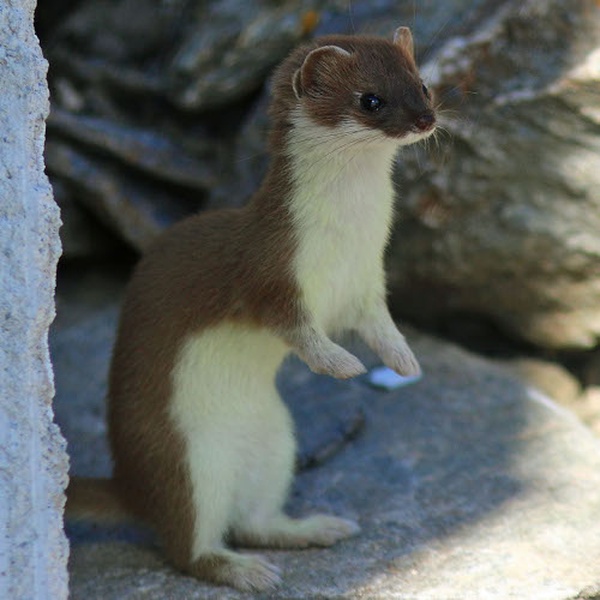
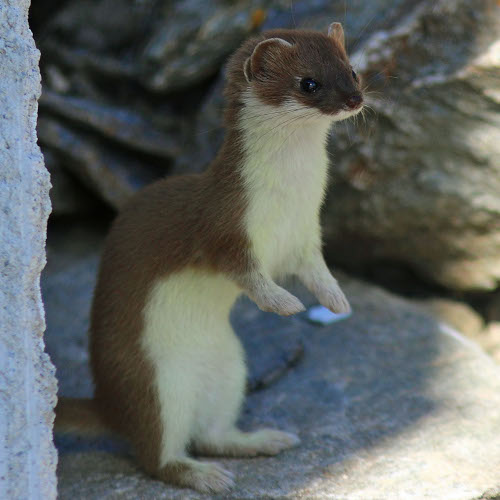
A splendid specimen of ermine. - Giuseppe Roux Poignant
Three species of small mustelids – the ermine (Mustela erminea), the wheat weasel (Mustela nivalis), and the European polecat (Mustela putorius) – coexist in the varied landscape of Northwestern Italy, but they remain largely elusive and poorly understood. A recent study conducted by a group of Italian researchers, including Luca Maurino from the Protected Areas of the Cozie Alps, used ecological niche models (ENM) and a wide reporting network to map the likelihood of presence of these species and compare their environmental requirements on a regional scale. The results, published in a scientific article on November 22 in the journal Mammal Research, provide useful insights to guide targeted conservation actions and focus on emerging threats.
The study gathered georeferenced reports (2000–2023) from open databases and a collaborative network of institutions – including parks, museums, and research groups – that verified images and observations to ensure data reliability. After appropriate cleaning and spatial “thinning” procedures, three algorithms (GBM, Random Forest, and Maxent) were employed in a predictive model to define habitat suitability across the entire territories of Piedmont and Aosta Valley.
The results
The comparison of the data highlights distinct differences in the environmental preferences of the three species. The ermine primarily occupies high-altitude habitats – alpine meadows and rocky areas – and shows a strong sensitivity to climatic variables, which makes it particularly vulnerable to the rapid changes that have affected the mountain. The wheat weasel has a wide ecological niche that includes both lowland and mountain areas, ranging between less intensive agricultural landscapes and coniferous forests. The European polecat, finally, has been identified mainly in lowland areas with rice fields and deciduous floodplain forests, where the combination of temperature and prey availability makes it more suited. Analyses of niche overlap show moderate affinity between the wheat weasel and the polecat, while the ermine appears ecologically more distinct.
The work also highlights important limitations: most of the information derives from opportunistic reports (sightings, road accidents, camera traps) and therefore does not allow for accurate estimates of abundance. For this reason, the authors emphasize the need for long-term monitoring plans that adopt specific tools for small mustelids and actively involve the network of protected areas.
What practical implications for the territory? In the mountains, conserving the ermine will require measures to preserve alpine meadows and reduce risks associated with climate change; in the lowlands, agro-environmental management – the protection of field mosaics, hedges, and wetlands such as rice fields – will be crucial to support populations of wheat weasels and polecats and to limit the negative impacts of intensive agriculture (habitat loss, use of rodenticides). Finally, the study reiterates that distributed knowledge (citizen science, reports from parks, local archives) is a strategic resource for elusive species and for building conservation policies based on real data.
The researchers' message is clear: monitoring must continue, strengthening synergies between parks, universities, and civic networks, and developing management plans that take into account both climatic factors and transformations of the agro-sylvo-pastoral landscape. The Protected Areas of the Cozie Alps participated in the research to provide the results of the work done in past years and to collaborate in defining future monitoring and protection activities for these small, yet ecologically important, predators.
Click here to open the Parcopedia section dedicated to the ermine.
You might also be interested in...
- campaign Monitorare gli ortotteri: una sperimentazione nei Parchi Alpi Cozie
- tactic Monitoraggio piccoli mustelidi
- campaign Climate change is pushing birds higher.
- campaign The research days: a report
- tactic The Protected Areas of the Cozie Alps project on iNaturalist
- tactic MonITRing
- tactic Monitoraggio della Biodiversità Animale in Ambiente Alpino
- book Research
- campaign The migrations of ibexes and climate change
- campaign The impacts of vehicle traffic on the Assietta