The wolf in the Alps: new data from the 2023–2024 monitoring
Jan. 29, 2026 Research

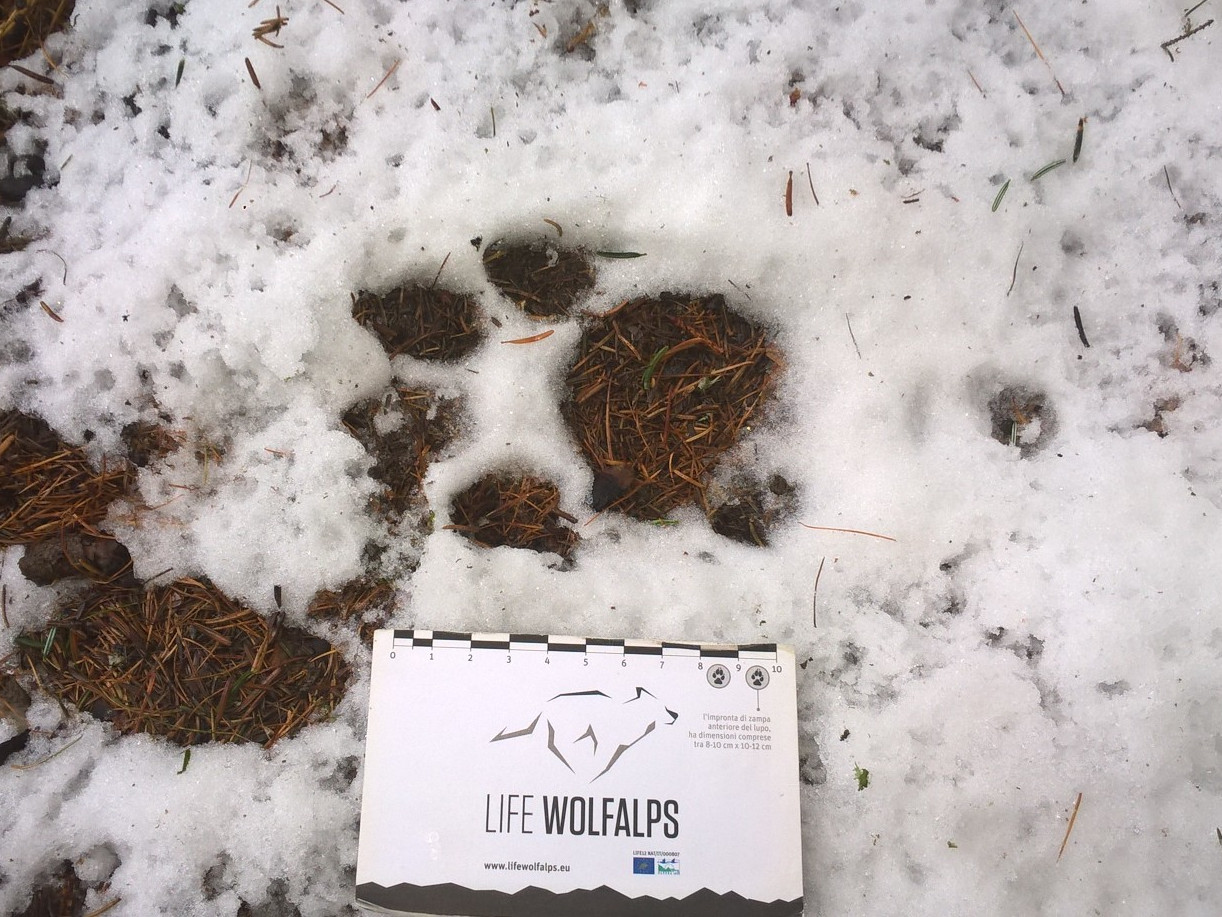
A wolf footprint identified during monitoring.
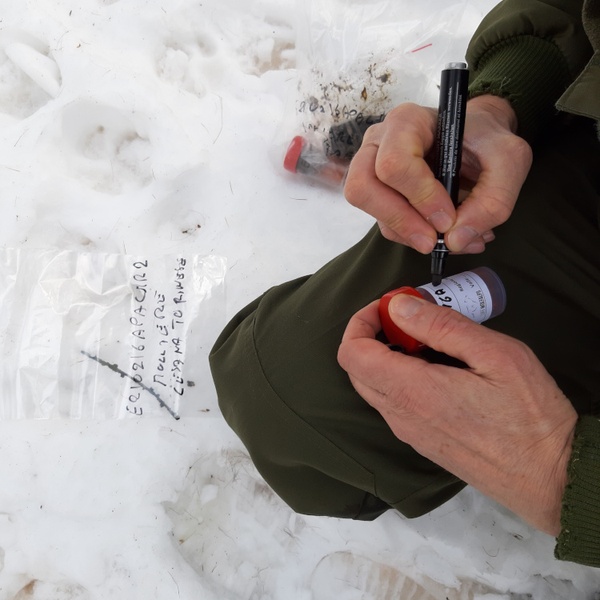
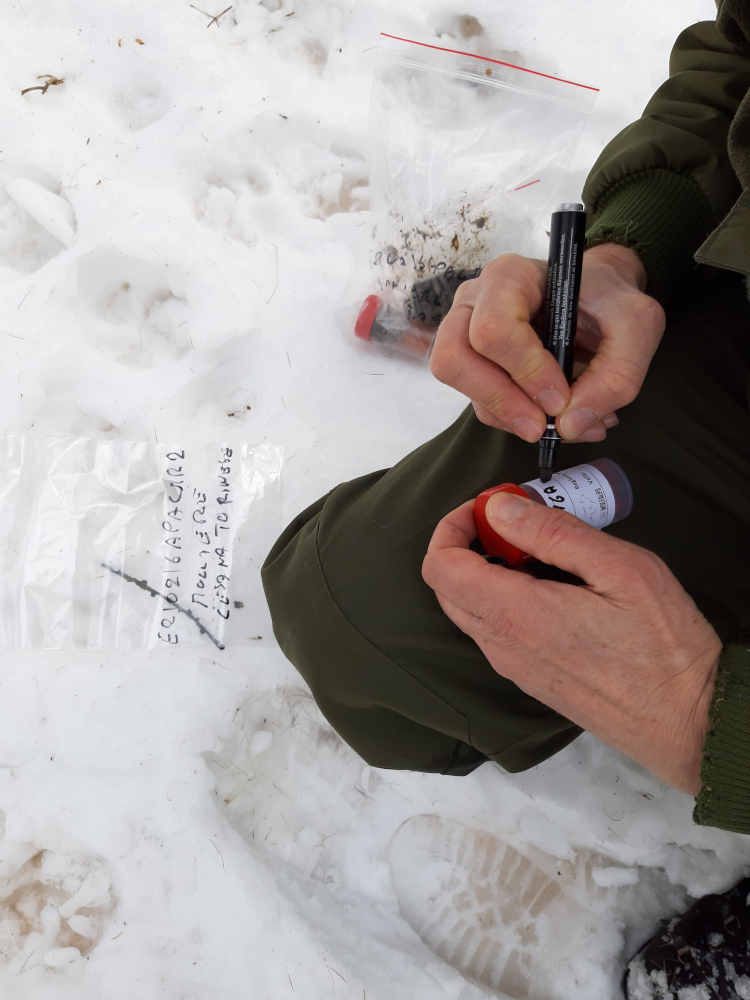
The collection of biological samples that are sent to laboratories for genetic analysis.
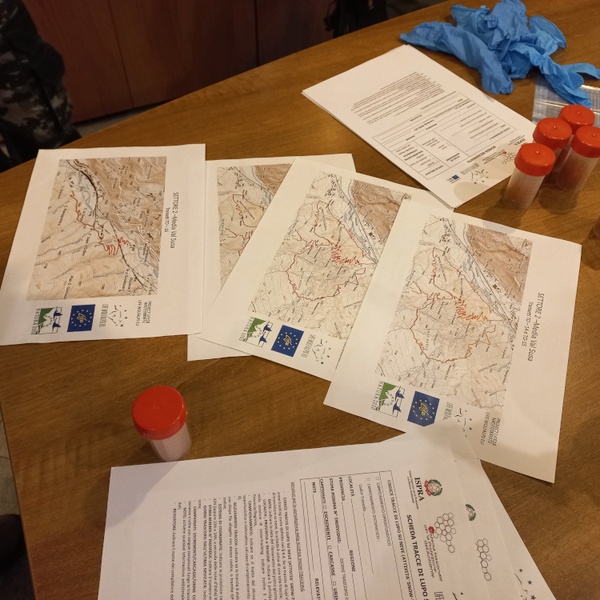
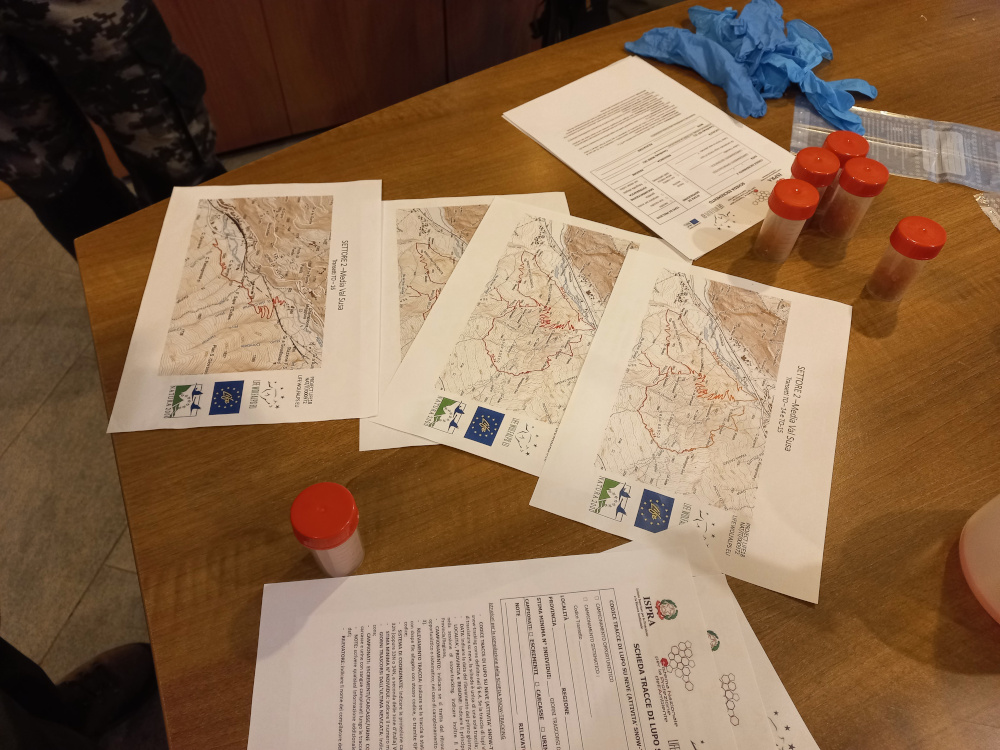
The preparatory work on the transects that are traversed in search of traces of the wolf's presence.
A wolf footprint identified during monitoring. - Elisa Ramassa
The collection of biological samples that are sent to laboratories for genetic analysis. - Simona Molino
The preparatory work on the transects that are traversed in search of traces of the wolf's presence. - Nadia Faure
The new scientific report "The Wolf Population in the Italian Alpine Regions 2023–2024" has been published, carried out as part of the European project LIFE WolfAlps EU. The study updates the picture of the distribution and abundance of wolves across the Italian Alpine range, providing data fully comparable to that of the previous national monitoring conducted in 2020–2021.
The scientific investigation, coordinated at an alpine scale and based on standardized methodologies defined by ISPRA, involved a broad network of entities, technicians, and volunteers. The Protected Areas of the Cozie Alps also actively participated in monitoring activities in Piedmont, contributing to the collection of data, genetic samples, and verified reports within the Alpine Regions Wolf Network.
The results indicate an overall estimated population of 1,124 wolves in the Italian alpine regions (credibility interval between 980 – 1,316 individuals), with a distribution now articulated from west to east across all sectors of the mountain range. There is a highlighted increase in the population compared to the 946 individuals (credibility interval between 822 – 1,099) recorded during the 2020–2021 monitoring, confirming the expansion trend at the alpine scale already observed in previous years.
Particularly significant is the data regarding the annual growth rates of the population. In the overall Italian Alps, the estimated rate (λ) is 1.06, a value that indicates an average growth of 6 wolves for every 100 individuals per year compared to the previous monitoring. The picture, however, varies geographically: while in the central-western sector – which includes Liguria, Piedmont, and Valle d'Aosta – growth appears more contained (λ = 1.04), a sign of a population nearing stabilization, in the central-eastern sector a more marked increase is recorded (λ = 1.10), indicative of an ongoing expansion phase.
Piedmont continues to represent the main core of the alpine wolf population with an estimated 464 individuals. In these areas, the species is now well established in mountainous environments and is progressively extending its presence into hilly and plain contexts where the main population growth nuclei are measured; a phenomenon already emerged in the 2020–2021 monitoring and now further consolidated.
The report confirms the importance of a coordinated and continuous monitoring effort, based on solid scientific foundations and on widespread collaboration between protected area management entities, other institutions, and the research community. Some data help to understand the extent of the effort and the resulting value of the achieved results.
During the 2023-2024 monitoring period, a total of 41,603 km (40,725 km in 2020-2021) of transects were covered by all personnel involved in the search for signs of wolf presence. The biological samples collected and analyzed amounted to 800 (792 in 2020-2021) which allowed for the distinction of 492 different genetic profiles of wolves, including 254 females, 235 males, and 3 undetermined. The new data represent a fundamental tool for understanding the evolution of wolf presence in the Alps and for supporting management and conservation strategies based on updated and shared information.
The publication of the 2023–2024 report, attached here, therefore fits into a long-term path that sees the Protected Areas of the Cozie Alps and the Piedmont region as protagonists in the monitoring and knowledge of a species symbolizing the return of large fauna to the Alps.
Attachments:
| open_in_new The wolf population in the Italian Alpine regions 2023/2024 | The technical report published in November 2025 | 3.5 MB |
You might also be interested in...
- campaign The wolf in Piedmont: the results of the monitoring 2023-2025
- campaign Final conference LIFE WolfAlps Eu: a report
- tactic Life WOLFALPS EU
- tactic LIFE12 NAT/IT/000807 LIFE WOLFALPS
- campaign Monitorare gli ortotteri: una sperimentazione nei Parchi Alpi Cozie
- campaign Climate change is pushing birds higher.
- campaign The impacts of vehicle traffic on the Assietta
- campaign Two days of discussion on water resource management
- campaign The territorial distribution of mustelids in a study
- campaign The research days: a report