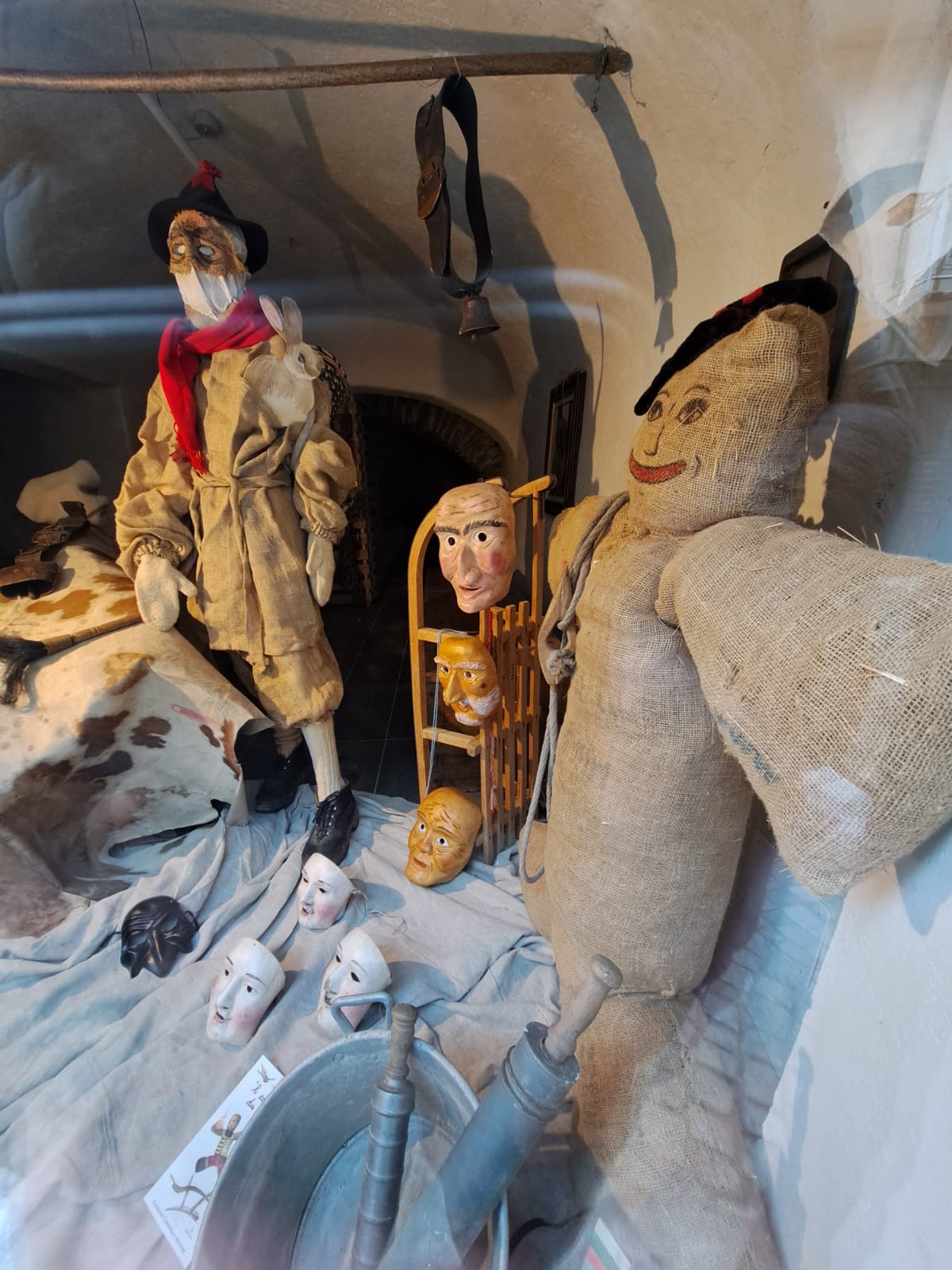
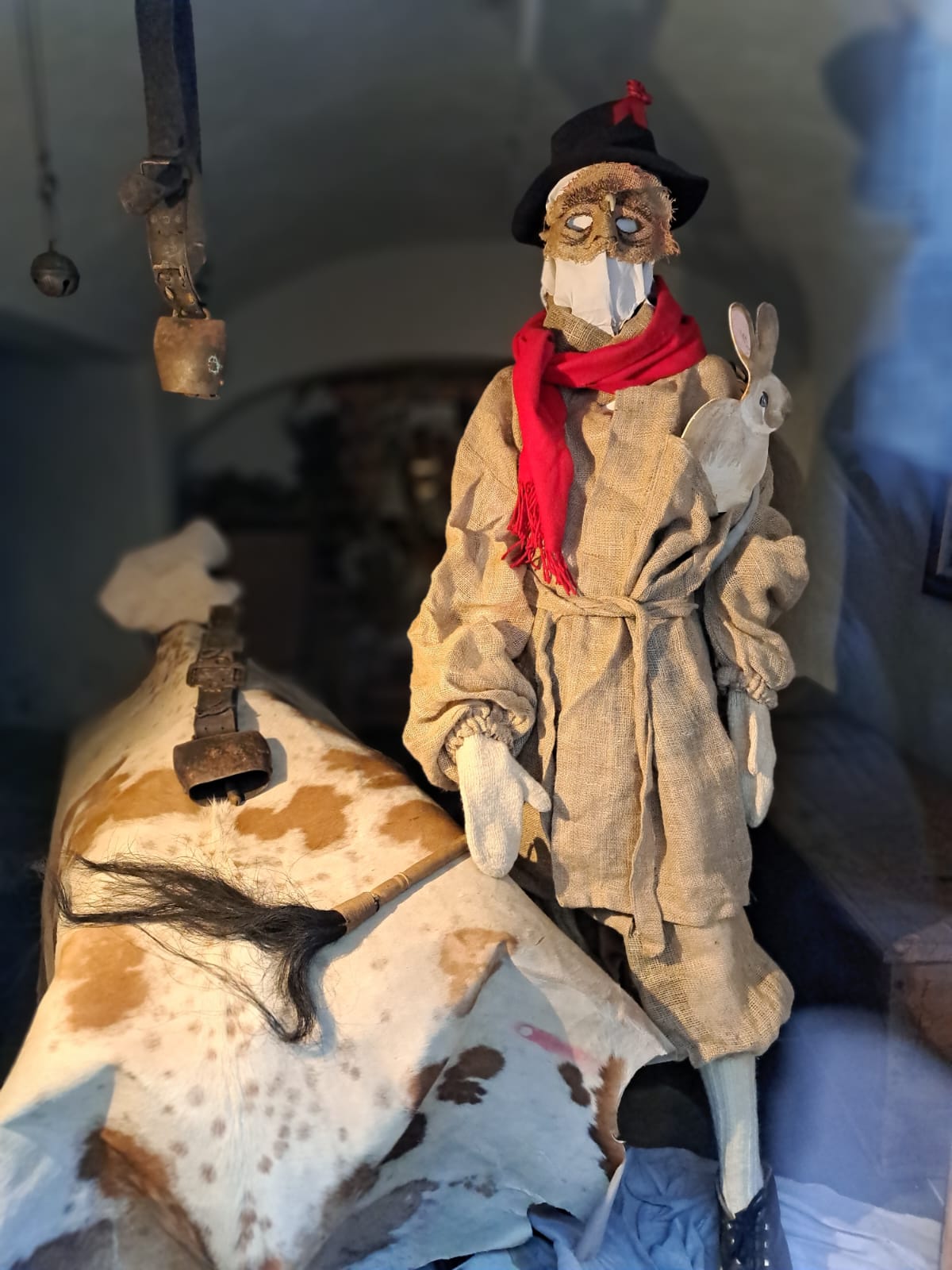
Carnival 2026 in the window of Hotel Dieu
Feb. 1, 2026 Ecomuseum

Hotel Dieu - Carnival of Salbertrand
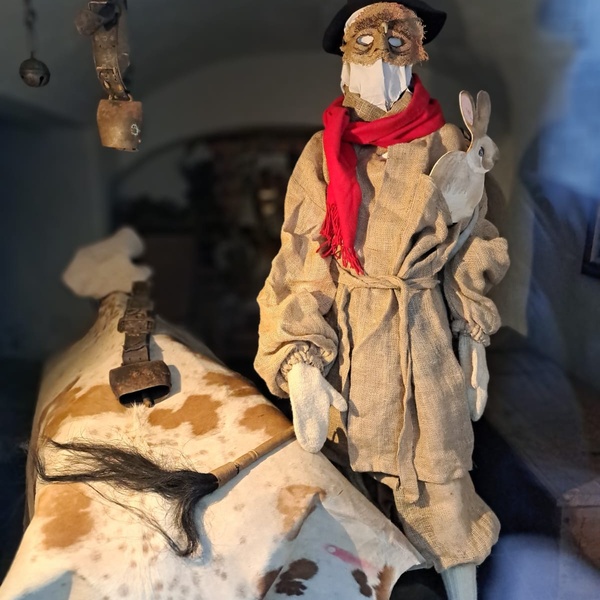
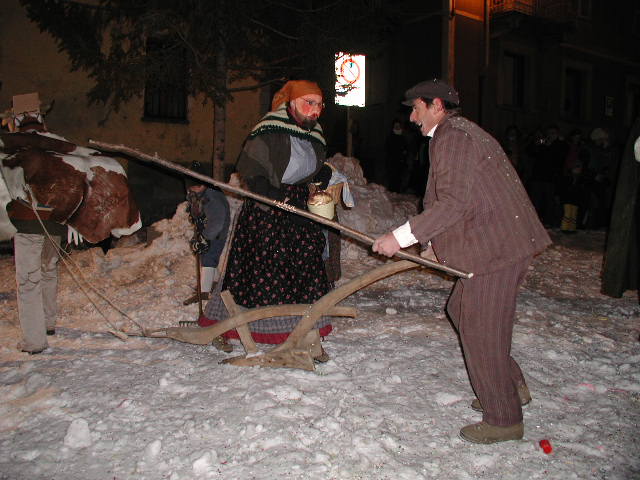
Hotel Dieu - Carnevale di Salbertrand: plowing of the snow
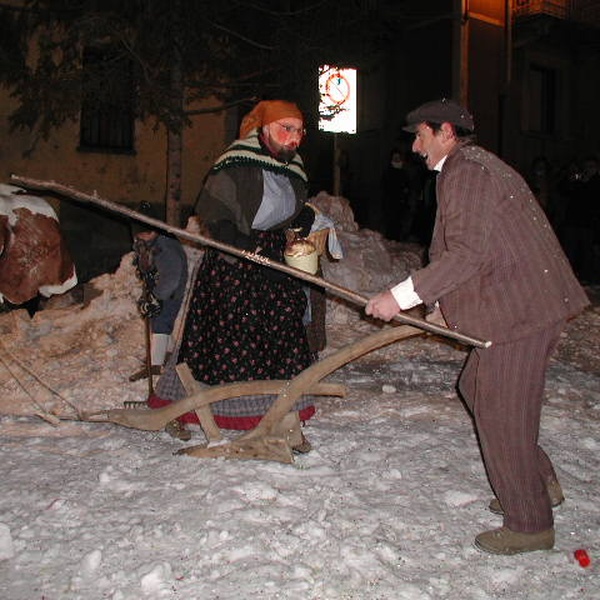
Salbertrand 2006 - The Plowing of Snow
Hotel Dieu - Carnival of Salbertrand - Rosalba Cassarin
Hotel Dieu - Carnevale di Salbertrand: plowing of the snow - Rosalba Cassarin
Salbertrand 2006 - The Plowing of Snow
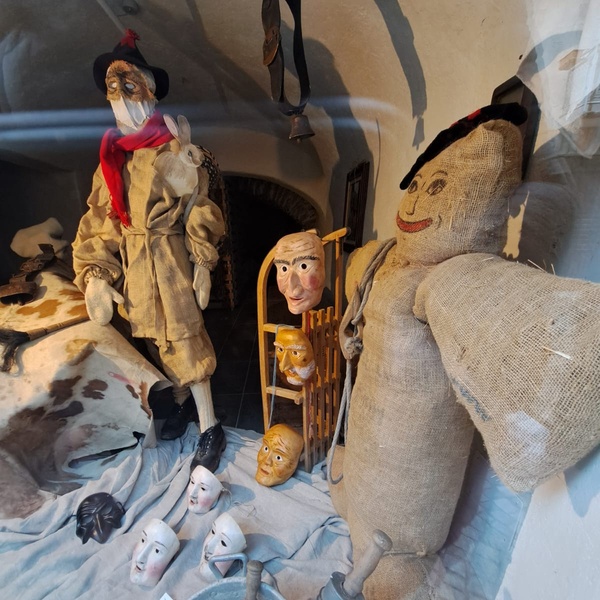
In the center of the village of Salbertrand, in the window of the Hotel Dieu, Carnival returns with a setup dedicated to ancient rites and traditional masks.
The plowing of the snow, the straw puppet, and the Carnival costume, the wooden masks carved by the Salbertrand artist Dario Milesi, the vizajeřa, the syringes used by the siringäri to play pranks and soak people, and the cowbells are symbols of a feast of ancient origin that has been passed down from generation to generation while contaminating and opening itself to modernity.
The cheerful and colorful setup created in the window by the Ecomuseo Colombano Romean pays homage to the Carnavà du Guéini, the Carnival of the Salbertrand citizens, always nicknamed Guéini (from the Occitan verb arguéinā: to thrash about), people who know “how to party properly.” The spirit with which Carnival is still celebrated today in Salbertrand stays true to this nickname and keeps alive some traditions that have survived over time, such as the parade with the müsicca, the house-to-house distribution of the turtiòu of Sunday, and the reading of the will, with the burning of Carnival during the second parade that takes place on the evening of Mardi Gras.
In the window of the Hotel Dieu, the Carnival mask and the cow, together with the plow, recall the rite of snow plowing traditionally interpreted by two men with animal masks, cow hides on their shoulders, harnessed to a plow guided by a plowman, with his wife, the housewife, the menajeä, who sowed, and the children who followed and covered the furrow. A gesture that represented the symbolic fertilization process of the land. Ancient rites of a cyclical festive time that marked the return of light after the darkness of winter and celebrated the awakening of nature.
Propitious rituals, characters, gestures, and messages imprinted in the memory of the village elders have been explored through an in-depth anthropological study conducted by researcher Lia Zola and published in the Cahier n°6 of the Ecomuseum (2009).
The new setup has been made possible thanks to the ArTeMuDa association, which, with its Theater Research Laboratory in Salbertrand, in 2006 curated the revival of the traditional Salbertrand Carnival as it was celebrated before World War II.
To learn more, it's recommended to watch the documentary video proposed in a video premiere on the evening of Mardi Gras during the 2021 edition of Chantar l'Uvern.
February 17 at 9:00 PM Piazza Guiffre, parade featuring masks from Bardonecchia and Oulx. In the station square, bonfire of Carnival.
You might also be interested in...
- shopping_cart 'L Carnavà du Guéini - Il Carnevale di Salbertrand - Cahier n°6
- campaign Storia di un uomo e di un quadro
- campaign Penna, pennino e calamaio in vetrina all'Hotel Dieu
- campaign Ecomusei in scena: il workshop annuale della Rete Ecomusei Piemonte
- campaign I marmi del Re: disponibile la presentazione su You Tube
- event Vauban at the Fort of Exilles - Book Presentation
- event Vauban at the Fort of Exilles - Book Presentation
- book Ecomuseo Colombano Romean
- book Oven
- book Cappella dell'Annunciazione dell'Oulme