
 Flora
Flora

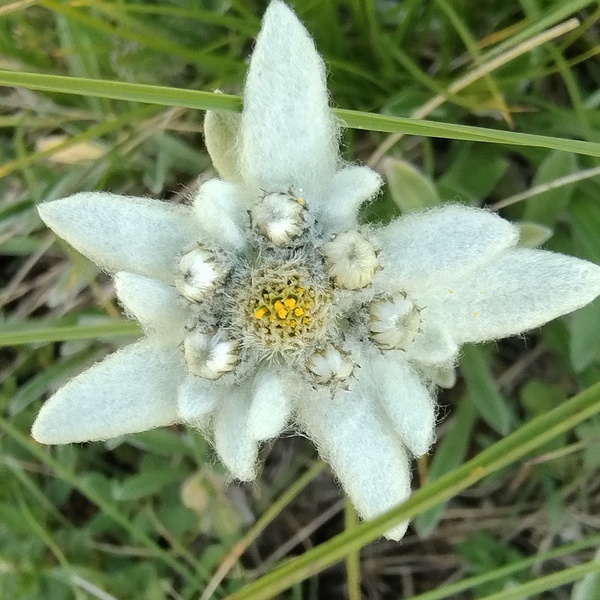
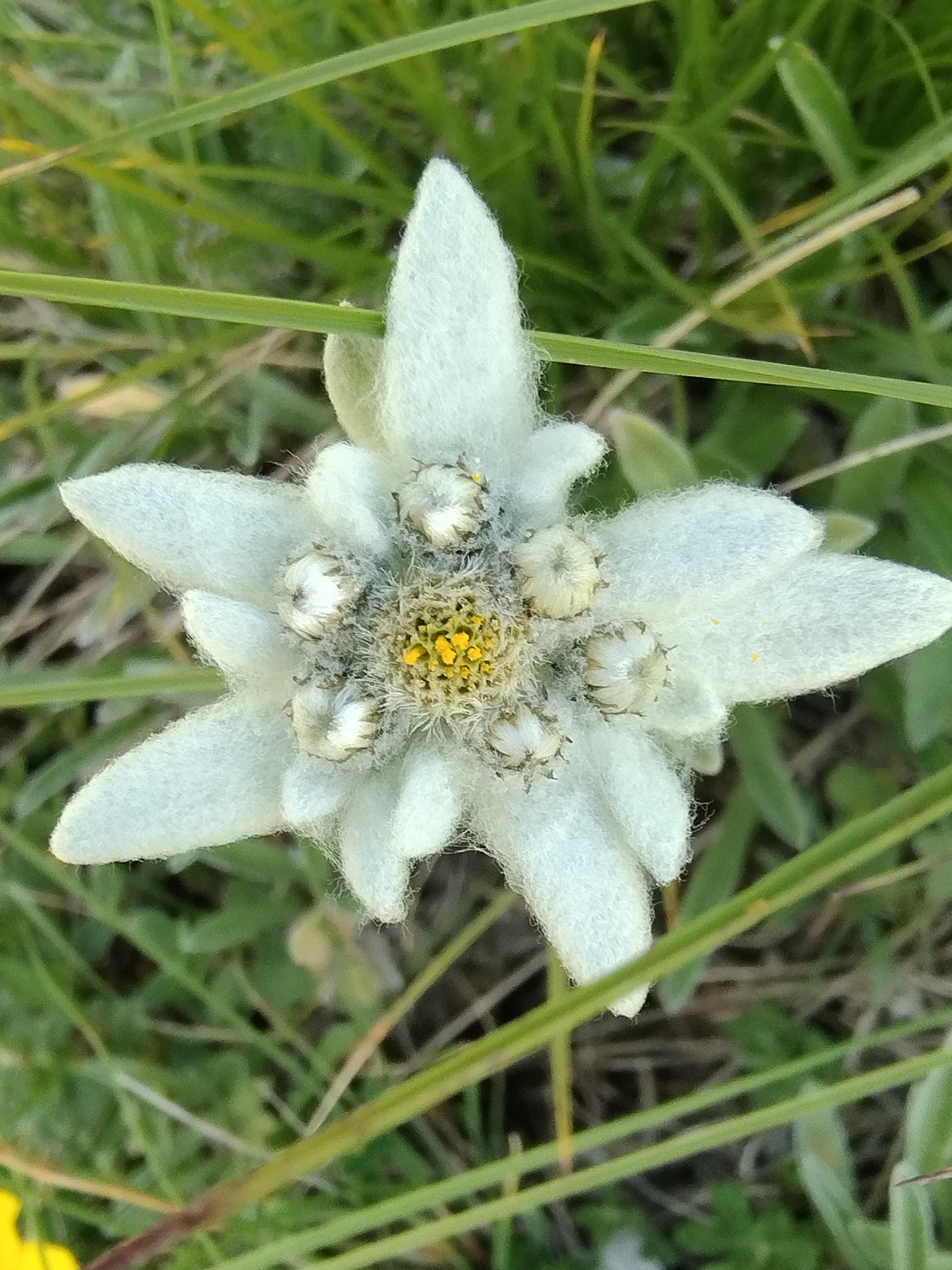
A splendid specimen of edelweiss in the Troncea Valley Natural … - L. Ghirardi
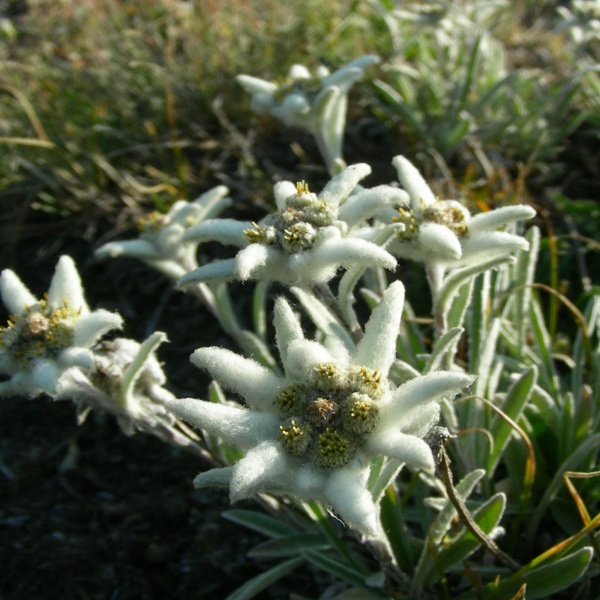
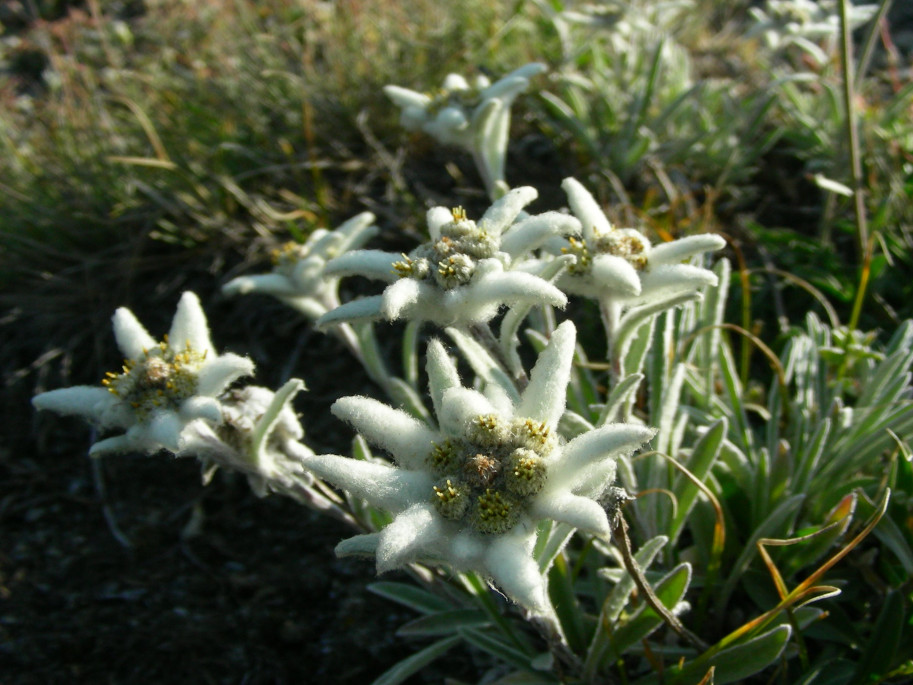
A beautiful tuft of alpine stars in the Gran Bosco … - E. Ramassa
A splendid specimen of edelweiss in the Troncea Valley Natural … - L. Ghirardi
A beautiful tuft of alpine stars in the Gran Bosco … - E. Ramassa
Classification:
Common name: edelweiss
Kingdom: Plantae
Class: Magnoliopsida
Family: Asteraceae
Genus: Leontopodium
Species: Leontopodium alpinum
Habitat:
In the Alps, it grows between 1500 and 3000 meters above sea level, preferably on rocky and landslide slopes with a limestone substrate.
Where can you find me?
Where can you find me?
Parco naturale Gran Bosco di Salbertrand
Parco naturale Orsiera Rocciavrè
Parco naturale Val Troncea
ZSC Bardonecchia Val Fredda
ZSC Cima Fournier e Lago Nero
ZSC Col Basset
ZSC Gran Bosco di Salbertrand
ZSC Pendici del Monte Chaberton
ZSC Rocciamelone
ZSC Valle della Ripa
ZSC Valle Thuras
ZSC – ZPS Orsiera Rocciavrè
ZSC – ZPS Val Troncea
Classification:
Common name: edelweiss
Kingdom: Plantae
Class: Magnoliopsida
Family: Asteraceae
Genus: Leontopodium
Species: Leontopodium alpinum
Habitat:
In the Alps, it grows between 1500 and 3000 meters above sea level, preferably on rocky and landslide slopes with a limestone substrate.
The emblematic symbol of European high mountains, the edelweiss is one of the most iconic plants of the Alps, capable of evoking harsh environments, open landscapes, and extreme climatic conditions. Its unmistakable appearance, with white-silver inflorescences in a typical star shape, is the result of refined evolutionary adaptations that allow it to thrive at high altitudes, often at the upper limit of vegetation.
A plant that defies extreme environments
Belonging to the Asteraceae family, the edelweiss is a perennial species of small size, generally measuring between 5 and 20 centimeters in height. What is commonly considered the "flower" is actually a compound inflorescence: the true flowers are gathered in small central flower heads, surrounded by woolly bracts arranged like rays. The dense whitish hair covering its surface serves a fundamental function, shielding the plant from ultraviolet radiation, reducing excessive transpiration, and protecting it from the thermal fluctuations typical of alpine environments. In fact, it becomes thicker and more compact with increasing altitude and under extreme environmental conditions. The fruits are achenes 1.3 mm long topped by a short pappus of straw-colored hairs measuring 4-6 mm. The seeds fall to the ground and are dispersed in three main ways: through transportation by ants (myrmecochory), via the hooks on the bracts that cling to the fur of animals (zoochory), and by the wind which can carry the pappus several kilometers (anemochory).
Where it grows
It is believed that the edelweiss is native to the arid mountainous environments of Central Asia, where many other species of Leontopodium grow. Presumably, it migrated to the Alps during the most recent glaciations, activating a series of adaptations that allowed it to survive subsequent climate changes. It prefers calcareous substrates and dry, well-drained environments, such as scree, rock meadows, and debris slopes, usually between 1,500 and 3,000 meters in altitude. Its presence often indicates little disturbed habitats of high natural value. Despite the romantic image that accompanies it, the edelweiss is an extremely specialized and sensitive plant, linked to precise ecological conditions.
In the Protected Areas of the Cozie Alps, the edelweiss is found in the high-altitude sectors, at the heads of the valleys, particularly in the calcareous contexts of the upper Susa Valley and Chisone Valley, where it finds favorable conditions by colonizing sunny slopes, ridges, and open environments, contributing to characterizing the high-altitude plant landscape. However, its distribution is not uniform: it is rarer or absent in areas predominantly composed of siliceous rocks, where the soil conditions are less suitable.
Ecological role
From an ecological perspective, the edelweiss plays a significant role within alpine plant communities. Although it is not dominant, it contributes to floristic biodiversity and provides resources to specialized pollinating insects that are active during the brief growing season. Flowering generally occurs between July and September, depending on altitude and seasonal trends.
Threats and protection
The strong symbolic value of the edelweiss has historically led to indiscriminate harvesting, especially between the 19th and 20th centuries, when the flower was seen as a trophy for climbers and hikers, becoming the very symbol of numerous associations of mountain enthusiasts. This pressure has caused a local decline in the species in many alpine areas, to the point that its collection was prohibited in Switzerland as early as 1878. In Piedmont, Leontopodium is not included in the list of species with absolute protection (Regional Law No. 32/1982), but its collection is prohibited within regional parks and natural reserves, while it is allowed to collect up to 5 specimens per person per day, without uprooting the root system.
Etymology and symbolism
The scientific name Leontopodium derives from Latin and literally means "lion's foot" due to the shape of the inflorescence. The star-like arrangement of leaves around the true flower inspires the Italian common name, while in German-speaking areas it is called Edelweiss for the light color of the down that covers its surface.
In addition to its naturalistic value, the edelweiss also holds cultural and scientific interest. It has become an emblem of purity and resilience, appearing in folk traditions, military symbols, and artistic representations. In the scientific realm, it is the subject of studies related to adaptations to extreme conditions and the properties of substances produced by its tissues, some of which are also used in cosmetics.
Observing the edelweiss in its natural environment, without collecting it, means connecting with one of the most authentic elements of the alpine ecosystem. In the Protected Areas of the Cozie Alps, its presence represents an invitation to understand and respect the fragility of high-altitude environments, where every species tells a story of adaptation, balance, and resilience.
You might also be interested in...
- emoji_nature Alpine bells
- emoji_nature Larch
- emoji_nature Genepì
- emoji_nature Wild narcissus
- emoji_nature Swiss pine
- emoji_nature Scarpetta di Venere
- campaign Accidental Poisoning by Toxic Plants in Pets: A Project to Diagnose and Manage Them
- campaign Poisonous plant species and grazing animals
- book Avigliana Lakes Natural Park
- book Orsiera Rocciavrè natural park