
 Fauna
Fauna

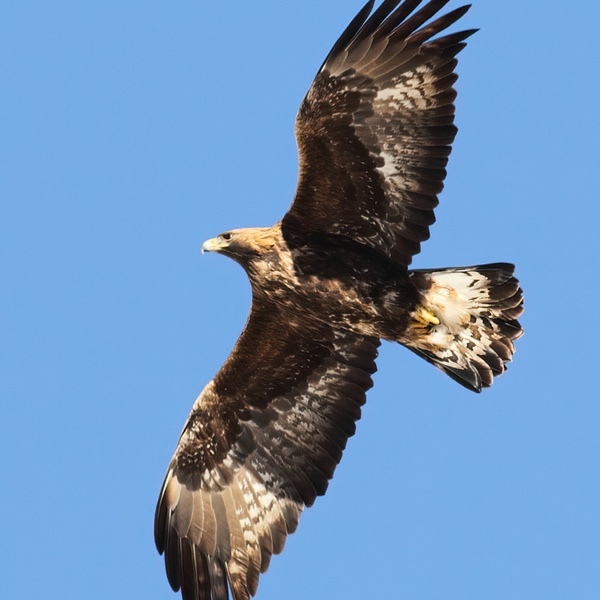
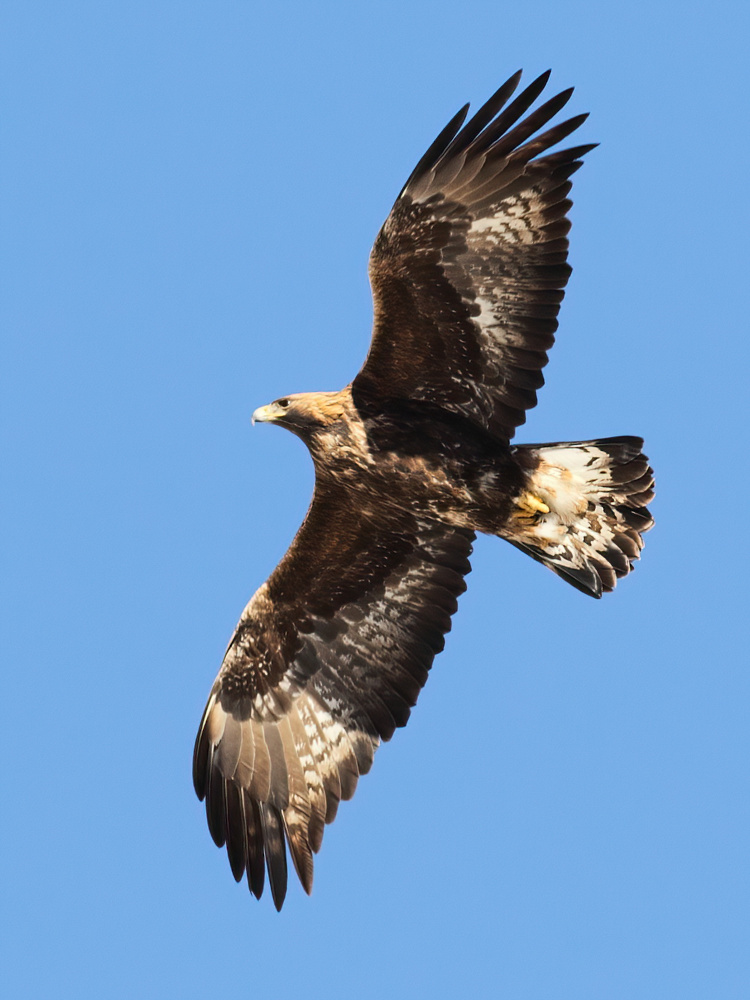
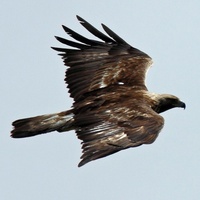
A golden eagle soars through the skies of the Val … - R. Casse
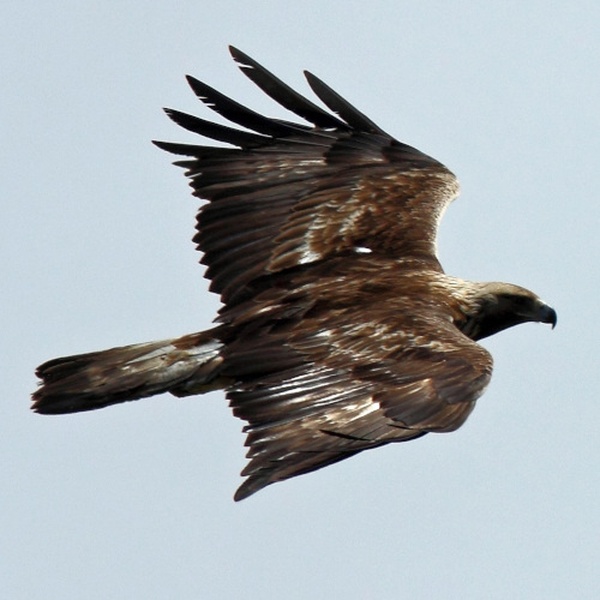
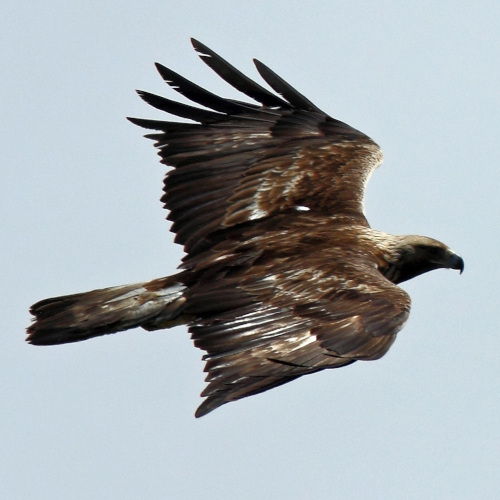
A golden eagle captured from an elevated position. - G. Roux Poignant
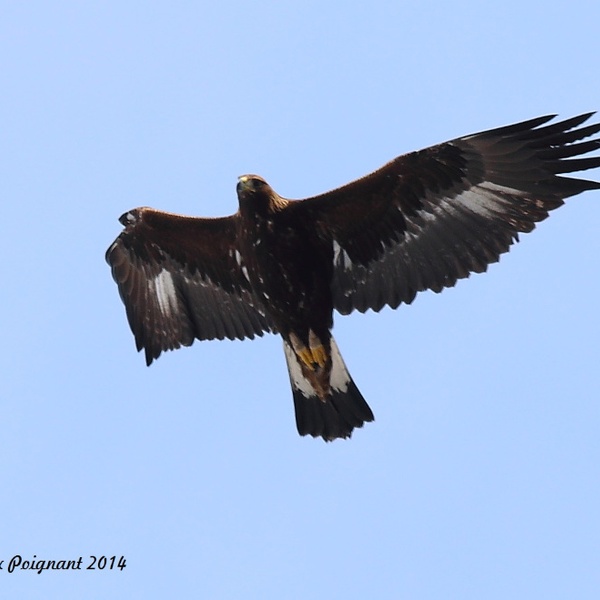
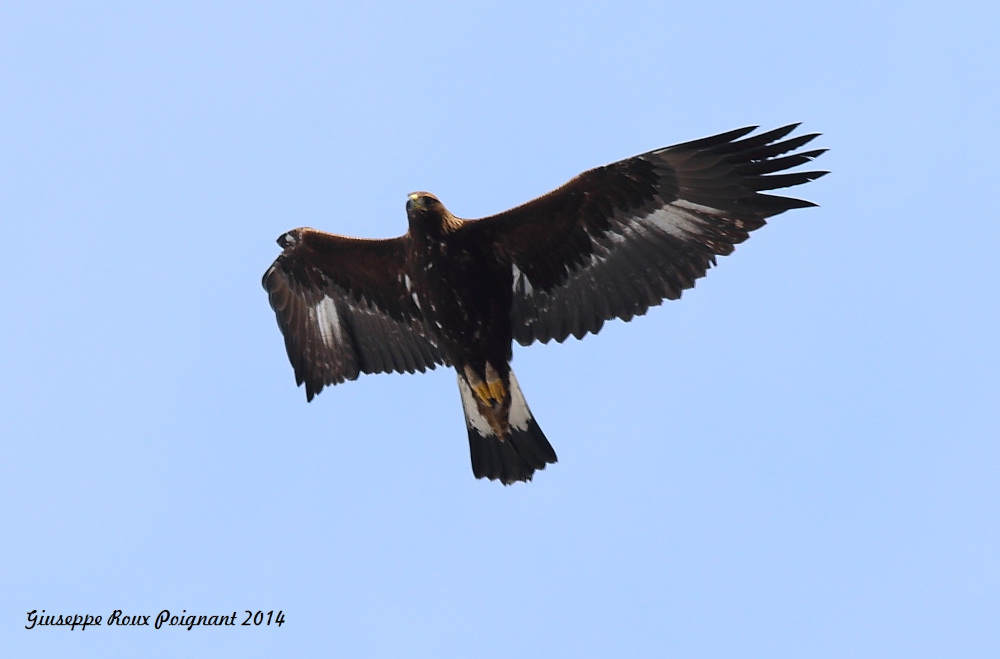
A golden eagle in flight in the skies of the … - G. Roux Poignant
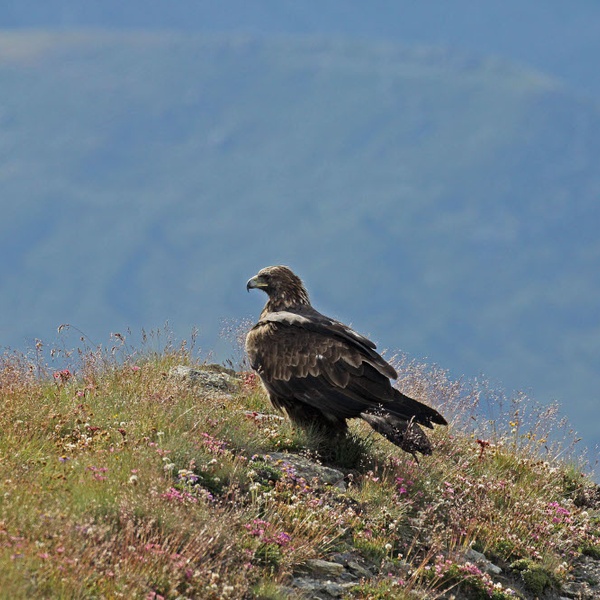
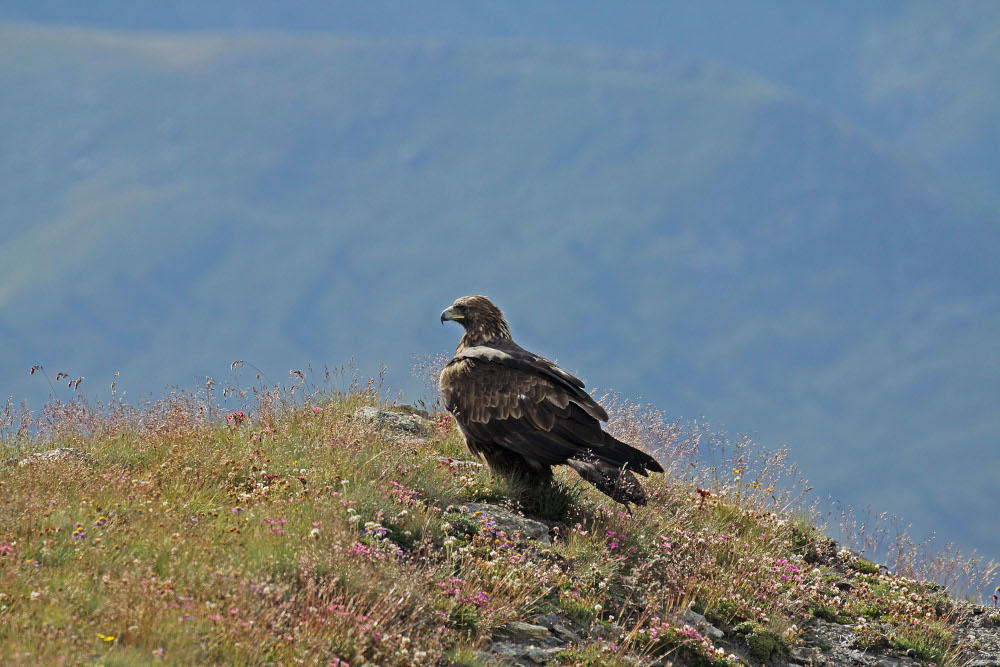
A golden eagle perched on the ground in the Gran … - M. Rosso
A golden eagle soars through the skies of the Val … - R. Casse
A golden eagle captured from an elevated position. - G. Roux Poignant
A golden eagle in flight in the skies of the … - G. Roux Poignant
A golden eagle perched on the ground in the Gran … - M. Rosso
Classification:
Common name: golden eagle
Kingdom: Animalia
Phylum: Chordata
Subphylum: Vertebrata
Class: Aves
Order: Accipitriformes
Family: Accipitridae
Subfamily: Aquilinae
Genus: Aquila
Species: Aquila chrysaetos
Habitat:
Mountain ranges of the Alpine arc of the Apennines and of Sicily and Sardinia. It favors open environments and meadows for hunting and rocky areas for nesting.
Where can you find me?
Where can you find me?
Parco naturale Gran Bosco di Salbertrand
Parco naturale Laghi di Avigliana
Parco naturale Orsiera Rocciavrè
Parco naturale Val Troncea
ZSC Bardonecchia Val Fredda
ZSC Boscaglie di Tasso di Giaglione
ZSC Champlas Colle del Sestriere
ZSC Cima Fournier e Lago Nero
ZSC Col Basset
ZSC Gran Bosco di Salbertrand
ZSC Les Arnauds Punta Quattro Sorelle
ZSC Pendici del Monte Chaberton
ZSC Rocciamelone
ZSC Valle della Ripa
ZSC Valle Thuras
ZSC – ZPS Orsiera Rocciavrè
ZSC – ZPS Val Troncea
Classification:
Common name: golden eagle
Kingdom: Animalia
Phylum: Chordata
Subphylum: Vertebrata
Class: Aves
Order: Accipitriformes
Family: Accipitridae
Subfamily: Aquilinae
Genus: Aquila
Species: Aquila chrysaetos
Habitat:
Mountain ranges of the Alpine arc of the Apennines and of Sicily and Sardinia. It favors open environments and meadows for hunting and rocky areas for nesting.
Description
Majestic and unmistakable, the golden eagle is the largest raptor that is permanently present in the Alps and one of the most evocative symbols of mountain environments. Widespread in much of the northern hemisphere, in Italy it finds its main range throughout the entire Alpine chain.
With a wingspan that can exceed 2 meters, the golden eagle is among the most imposing birds in Europe. Its plumage is generally dark brown, with golden reflections on the head and nape, from which its name derives. Females, larger than males, can reach weights of 6–7 kg.
Young eagles are easily recognizable by the white patches on their wings and tail, features that disappear with maturity.
Habitat and Distribution
It is believed that in the past its population was distributed throughout the northern hemisphere, even in plains and hilly areas. Subsequently, with anthropization, it has transformed into a typically mountainous species, frequenting open and wild environments: rocky cliffs, ridges, alpine meadows, and rocky areas. It requires large territories, alternating nesting areas (generally on inaccessible cliffs) with vast hunting grounds.
In the western Alps, including the Protected Areas of the Cozie Alps, the golden eagle is a regular and well-distributed presence. Here it finds ideal conditions: an abundance of prey and a mosaic of habitats that favor both nesting and foraging activities. The species is sedentary, and pairs occupy stable territories for many years.
Feeding and Behavior
As an apex predator, the golden eagle primarily feeds on medium-sized mammals (such as marmots, hares, and young ungulates) but supplements its diet with birds and carrion.
It usually hunts in pairs, utilizing thermal currents: soaring at high altitudes or approaching the ground with low flights, typically one individual distracts the prey while the other catches it by surprise. Its extraordinary eyesight allows it to detect movements even from great distances.
Reproduction
Pairs are generally stable for life and highly territorial, occupying well-defined territories. The breeding season begins between late winter and early spring, preceded by spectacular courtship flights.
They build multiple nests within their hunting territory, choosing the one they deem most suitable for laying eggs at that time. Typically, the nests are located lower than the hunting territory to facilitate the transport of prey. The female usually lays two eggs, but often only one chick survives. Fledging occurs after about two months, while complete independence takes several months.
Presence in the Cozie Alps
In the Protected Areas of the Cozie Alps, the golden eagle represents one of the most emblematic species of Alpine avifauna. It can be observed along the main valleys, where it soars over ridges and open slopes in search of prey.
The presence of territorial pairs indicates a good state of conservation of the mountain ecosystems: the eagle requires intact environments rich in biodiversity. As in other protected alpine areas, monitoring nesting pairs is a fundamental tool for assessing environmental quality.
Conservation Status and Threats
Globally, the species is classified as "least concern," but in Italy it is considered near threatened.
The main critical issues include:
• human disturbance at nesting sites;
• reduction of prey in some areas;
• reduction of open habitats due to forest advancement, leading to a decrease in hunting territories;
• collisions with infrastructure (wires, facilities);
• poaching, which today is greatly reduced but historically significant;
• lead poisoning, caused by ammunition used for hunting.
The protection of mountain environments and sustainable land management are key elements in ensuring the conservation of the species.
Curiosities
• The golden eagle can exploit thermal currents to fly long distances without flapping its wings.
• Despite its reputation, it cannot carry large prey in flight except under favorable conditions.
• It is a "flagship" species: its presence indicates well-conserved alpine ecosystems.
You might also be interested in...
- shopping_cart Calendar 2002
- emoji_nature Rock sparrow
- emoji_nature White partridge.
- emoji_nature Bearded vulture
- emoji_nature Mountain pheasant
- emoji_nature Eagle Owl
- campaign The foundational prohibition of parks: hunting
- campaign Climate change is pushing birds higher.
- campaign Val Troncea: inanellata la 48esima specie di avifauna
- campaign 39 anni da guardiaparco. Domenico Rosselli racconta una carriera nella natura